

AI Agency: How to Choose the Right Partner for Your Business Growth

Choosing an AI agency is no longer a luxury decision. It’s a strategic necessity. Most businesses today understand that AI can improve marketing performance, but they struggle to implement it themselves. They lack the specialized talent, the technical infrastructure, or simply the time to do it right. That’s where an AI agency comes in.
An AI agency brings deep expertise in machine learning, automation, natural language processing, and predictive analytics. They translate complex AI capabilities into practical marketing solutions that drive measurable results. But not all AI agencies are created equal. Some overpromise and underdeliver. Others focus too much on technology and forget about business outcomes.
This guide will walk you through what an AI agency actually does, when you need one, how to evaluate potential partners, what questions to ask, and how to avoid common mistakes that waste time and budget.
What Does an AI Agency Actually Do?
An AI agency specializes in applying artificial intelligence to marketing challenges. Their work typically spans strategy, implementation, and optimization across multiple channels. The best AI agencies don’t just sell you tools. They diagnose your specific problems, design custom solutions, and integrate AI into your existing marketing stack.
Core services usually include AI-powered SEO, automated content generation, predictive analytics for customer behavior, chatbot development, personalized email marketing, programmatic advertising optimization, and marketing automation workflows. Some agencies also offer custom AI model development for enterprises with unique needs.
What separates a good AI agency from a mediocre one is their ability to tie AI capabilities directly to business KPIs. They should be able to explain exactly how their solutions will increase your revenue, reduce your customer acquisition cost, or improve your conversion rates. Vague promises about “leveraging AI” or “transforming your business” are red flags.
Strategic Consultation and Planning
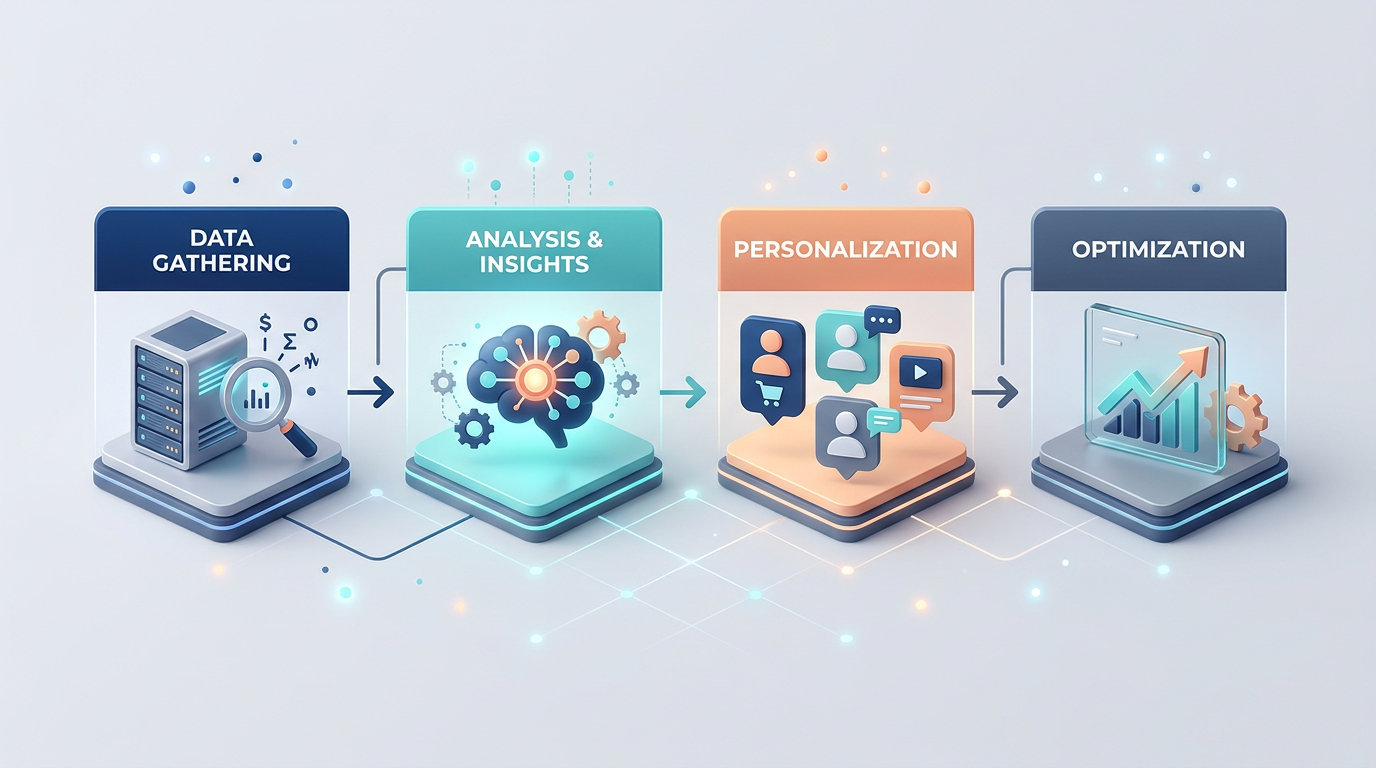
The best AI agencies start with a deep audit of your current marketing operations. They identify bottlenecks, inefficiencies, and missed opportunities where AI can create the most impact. They map out a phased implementation plan that prioritizes quick wins while building toward long-term transformation.
This planning phase should result in a clear roadmap with specific milestones, budget estimates, and expected ROI. If an agency can’t provide this level of clarity upfront, they’re not ready to be your partner.
Technical Implementation and Integration
Implementation is where many AI projects fail. An experienced AI agency knows how to integrate AI tools with your existing CRM, email platform, analytics setup, and content management system. They handle the technical complexity so your team doesn’t have to.
They also train your team on how to use new AI tools effectively. The goal is not to make you dependent on the agency forever, but to build internal capability while providing ongoing optimization and support.
When Your Business Actually Needs an AI Agency
Not every business needs an AI agency right now. If you’re a startup with limited budget and simple marketing needs, you’re probably better off learning the basics yourself or hiring a generalist marketing consultant. But there are clear signals that indicate you’re ready for specialized AI expertise.
You need an AI agency when your marketing team is drowning in repetitive tasks that could be automated. When you’re collecting customer data but not using it strategically. When your competitors are outranking you in search and you don’t know why. When your paid ad campaigns are underperforming and you’ve exhausted your internal optimization ideas.
You also need an AI agency when you want to scale without proportionally increasing headcount. AI enables one marketer to do the work of three or four, but only if the systems are set up correctly. If you’re planning aggressive growth and can’t afford to triple your marketing team, an AI agency can help you scale smarter.
Another strong signal is when you’re entering new markets or launching new products and need predictive insights to reduce risk. AI agencies can analyze market trends, competitor behavior, and customer sentiment to help you make more informed strategic decisions.
How to Evaluate Potential AI Agency Partners
Evaluating AI agencies is tricky because the space is full of buzzwords and inflated claims. Many traditional marketing agencies have rebranded themselves as “AI agencies” without adding real AI capability. Here’s how to separate signal from noise.
First, ask for case studies with specific results. Look for metrics like percentage increase in organic traffic, reduction in cost per lead, improvement in email open rates, or growth in conversion rate. Generic testimonials and vague success stories are worthless. You want to see proof that they’ve solved problems similar to yours.
Second, evaluate their technical depth. Ask them to walk you through their process for implementing a specific AI solution relevant to your business. A real AI agency will be able to explain the technical architecture, the data requirements, the integration steps, and the expected timeline. If they speak only in high-level marketing language and dodge technical questions, walk away.
Questions to Ask During the Vetting Process
Ask these questions in your initial conversations: What AI tools and platforms do you specialize in? Can you show me examples of custom AI solutions you’ve built? How do you measure ROI for AI projects? What does your typical client engagement look like in terms of timeline and budget? How do you handle data privacy and compliance? What happens if the AI solution doesn’t perform as expected?
The answers will reveal whether the agency has a mature, repeatable process or whether they’re figuring it out as they go. You want a partner who has done this dozens of times, not someone who’s experimenting on your budget.
Red Flags to Watch For
Be cautious if an agency promises unrealistic results like “triple your revenue in 30 days” or “rank number one for any keyword.” AI is powerful, but it’s not magic. Real results take time and depend on many factors including your industry, competition, and existing baseline performance.
Another red flag is if they push a one-size-fits-all solution. Every business has unique challenges, data structures, and goals. A good AI agency customizes their approach. If they’re selling you the exact same package they sell everyone else, they’re not thinking strategically about your specific needs.
Also watch out for agencies that don’t ask many questions. If they’re pitching solutions before they fully understand your business, your customers, and your current marketing operations, they’re guessing. Great agencies are curious. They dig deep before they propose anything.
What to Expect in Terms of Timeline and Investment
AI marketing projects are not overnight transformations. Depending on scope, you should expect an initial strategy and audit phase of two to four weeks. Implementation can take anywhere from one to three months for simpler projects, and up to six months or more for complex custom AI solutions.
Budget varies widely based on your needs. Smaller businesses might spend between $3,000 and $10,000 per month for ongoing AI agency services. Mid-market companies typically invest $10,000 to $30,000 monthly. Enterprise-level engagements can easily exceed $50,000 per month, especially when custom model development is involved.
One common mistake is underestimating the data preparation work required. AI models need clean, structured data to perform well. If your data is messy, incomplete, or siloed across multiple systems, expect to invest time and money in data cleaning and integration before the AI can deliver results.
Payment structures vary. Some agencies charge flat monthly retainers. Others use project-based pricing. A few offer performance-based models where part of their fee is tied to hitting specific KPIs. Each model has trade-offs. Retainers provide stability but less direct accountability. Performance-based pricing aligns incentives but can create pressure to chase short-term wins over long-term strategy.
In-House Team vs. AI Agency: Making the Right Call
Should you hire internal AI talent or partner with an AI agency? The answer depends on your budget, timeline, and long-term goals. Building an in-house AI team gives you full control and deep integration with your business, but it’s expensive and slow.
Hiring a senior AI engineer or data scientist costs $150,000 to $250,000 per year in salary alone, not including benefits, equipment, and training. You’ll likely need at least two to three specialists to cover the full range of AI marketing needs. That’s a $500,000 annual commitment before you see any results.
An AI agency gives you immediate access to a full team of specialists without the overhead. You get diverse expertise, proven processes, and faster time to value. The trade-off is less control and potential dependency on an external partner.
For most small to mid-sized businesses, starting with an AI agency makes more sense. Once you’ve proven ROI and understand what AI capabilities you need most, you can consider hiring internal talent to take over some of the work. Many companies use a hybrid model where they have one or two internal AI-savvy marketers who manage the relationship with the agency and handle day-to-day optimizations.
| Factor | In-House Team | AI Agency |
|---|---|---|
| Upfront Cost | High | Moderate |
| Time to Value | 6-12 months | 1-3 months |
| Expertise Breadth | Limited to hires | Full team access |
| Control | Complete | Shared |
| Scalability | Requires new hires | Flexible |
| Best For | Large enterprises | SMBs and mid-market |
The table above shows the key differences. Your decision should be based on where your business is today, not where you hope to be in five years. Start with the model that reduces risk and accelerates learning.
How AI Agencies Deliver Results: Real Examples
Understanding how AI agencies work in practice helps set realistic expectations. Consider a mid-sized B2B software company struggling with lead quality. Their marketing team was generating hundreds of leads per month, but only a small percentage converted to sales-qualified opportunities. The sales team was frustrated, and marketing felt pressure to prove ROI.
An AI agency stepped in and implemented predictive lead scoring. They analyzed three years of historical data to identify patterns that distinguished high-value leads from low-value ones. They built a model that scored every new lead in real time based on dozens of behavioral and firmographic signals.
Within three months, the sales team was closing 40% more deals because they were focusing on the right prospects. Marketing could justify their budget because they were delivering higher-quality pipeline. The AI agency didn’t just provide a tool. They restructured the entire lead handoff process and trained both teams on how to use the insights effectively.
Another example involves an e-commerce brand that wanted to scale content production without hiring more writers. An AI agency implemented automated product description generation using natural language models. They didn’t replace human writers entirely. Instead, they used AI to create first drafts that human editors refined for brand voice and accuracy.
The result was a 5x increase in content output with only a 30% increase in headcount. The brand was able to launch new product lines faster and improve SEO coverage across long-tail keywords. The AI agency also set up automated A/B testing to continuously optimize the content for conversion.
Common Mistakes When Hiring an AI Agency
Many businesses make predictable mistakes when selecting an AI agency. The most common is choosing based on price alone. The cheapest option is rarely the best value. AI expertise is expensive because it’s rare. If an agency’s pricing seems too good to be true, it probably is.
Another mistake is not defining clear success metrics upfront. Before you sign a contract, agree on exactly what success looks like. Is it a 20% increase in organic traffic? A 15% reduction in customer acquisition cost? A 10% lift in email engagement? Without clear KPIs, you can’t objectively evaluate whether the partnership is working.
Businesses also fail when they treat the agency like a vendor instead of a partner. AI projects require collaboration. Your team has domain knowledge and customer insights that the agency needs. If you just hand off the work and expect magic to happen, you’ll be disappointed. The best results come from close collaboration where both sides bring their strengths.
Finally, many companies give up too soon. AI projects often take two to three months before you see meaningful results. If you evaluate performance after just a few weeks, you’ll miss the full impact. Patience and consistent iteration are critical.
Frequently Asked Questions About AI Agency Selection
What is the biggest difference between an AI agency and a traditional marketing agency?
An AI agency uses machine learning, automation, and predictive analytics as core capabilities, not just as add-on services. Traditional agencies rely heavily on manual processes and human intuition. AI agencies build systems that learn and improve over time. They focus on scalability, data-driven decision making, and automation. Traditional agencies excel at creative strategy and brand building but often lack the technical depth to implement sophisticated AI solutions.
How long does it take to see results from working with an AI agency?
Most clients start seeing measurable improvements within two to three months. The timeline depends on the complexity of the project and the quality of your existing data. Quick wins like automated reporting or chatbot implementation can show impact within weeks. More complex projects like predictive modeling or custom AI development may take four to six months before you see significant ROI. Patience and realistic expectations are essential for success.
Do I need a large budget to work with an AI agency?
Not necessarily. While enterprise-level AI projects can cost tens of thousands per month, many AI agencies offer entry-level packages starting around $3,000 to $5,000 monthly. These packages typically focus on one or two high-impact use cases like SEO automation or email personalization. As you prove ROI, you can scale investment. The key is starting with a focused pilot project rather than trying to transform everything at once.
What data do I need to provide to an AI agency?
You’ll need to share historical marketing data, customer data, sales data, and any relevant behavioral data from your website and apps. The more data you can provide, the better the AI models will perform. This typically includes CRM records, email campaign metrics, website analytics, ad performance data, and customer transaction history. Data privacy and security are critical, so make sure the agency has strong protocols for handling sensitive information. If your data is incomplete or messy, a good agency will help you clean and structure it before building AI solutions. For businesses serious about scaling their AI capabilities, exploring AI agentic workflows can provide a strong foundation for automation at scale.
Can an AI agency help with content creation?
Yes. Many AI agencies specialize in automated content generation for blog posts, product descriptions, email copy, and social media. They use natural language processing models to create first drafts that human editors refine. This approach dramatically increases content output without sacrificing quality. AI agencies can also optimize existing content for search engines by analyzing top-ranking pages and recommending improvements. However, AI-generated content should always be reviewed by humans to ensure accuracy, brand alignment, and emotional resonance.
What happens if I’m not happy with the results?
Reputable AI agencies will outline clear expectations and guarantees in their contracts. Most offer a trial period or pilot project where you can evaluate their work before committing to a long-term engagement. If results fall short of agreed-upon KPIs, a good agency will diagnose the issue, adjust the strategy, and provide additional support at no extra cost. If the partnership truly isn’t working, you should have an exit clause that allows you to terminate the contract with reasonable notice. Always clarify these terms before signing anything.

Making Your Decision: Next Steps
Choosing an AI agency is a significant decision that will impact your marketing performance for years. Take the time to do thorough research, ask tough questions, and evaluate multiple options. Don’t rush into a partnership based on a flashy pitch or aggressive sales tactics.
Start by defining your specific goals and challenges. Write them down. Share them with potential agencies and see who asks the smartest follow-up questions. The agency that demonstrates the deepest understanding of your business is usually the best fit, even if they’re not the cheapest or the most well-known.
Request detailed proposals that include specific deliverables, timelines, and success metrics. Compare not just on price, but on the quality of their thinking, the relevance of their case studies, and the clarity of their communication. Check references. Talk to their current and former clients about what it’s actually like to work with them.
Once you’ve selected an agency, commit to the partnership fully. Provide the data, access, and collaboration they need to succeed. Set up regular check-ins to review progress and adjust strategy as needed. Treat the relationship as a long-term investment in your company’s growth, not just a transactional service engagement.
If you’re ready to explore how an AI agency can transform your marketing operations, understanding the broader landscape of AI-powered marketing strategy will give you the context you need to make an informed decision. The right partner will help you navigate the complexity, avoid costly mistakes, and unlock growth you couldn’t achieve on your own. For businesses looking to improve their visibility in AI-driven search, learning about GEO optimization can provide a competitive edge in how your brand appears in generative search results.


