AI Marketing: The Complete Guide to AI-Powered Marketing Strategy

Marketing teams are drowning in data, struggling to personalize at scale, and watching ad costs climb while conversion rates stagnate. The problem is not lack of effort. It’s the gap between what modern buyers expect and what traditional marketing workflows can deliver.
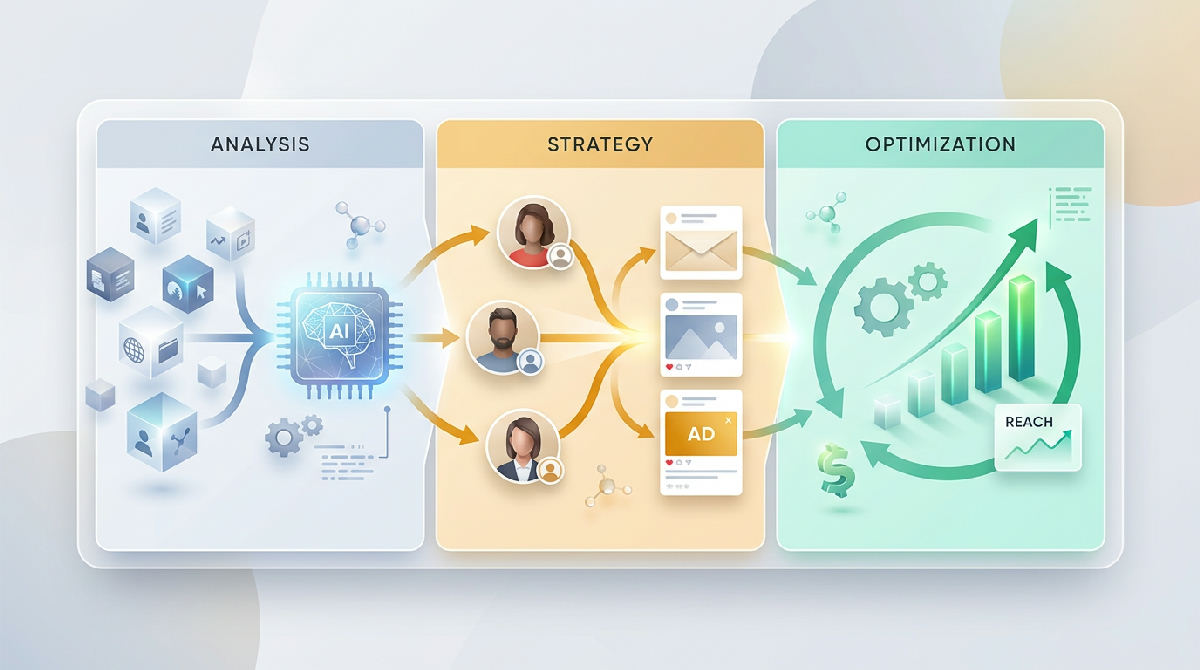
AI marketing solves this by automating repetitive tasks, analyzing customer behavior in real time, and generating personalized content at scale. Instead of guessing what works, AI systems test, learn, and optimize continuously across every channel.
AI marketing uses artificial intelligence technologies like machine learning, natural language processing, and predictive analytics to automate marketing decisions, personalize customer experiences, and improve campaign performance. It handles everything from content creation and audience segmentation to ad bidding and lead scoring without constant manual intervention.
What AI Marketing Actually Does in Practice
AI marketing is not a single tool or tactic. It is a collection of capabilities that make marketing faster, smarter, and more scalable.
At its core, AI marketing analyzes patterns in customer data and uses those insights to make decisions. It can predict which leads are most likely to convert, generate email subject lines that drive higher open rates, or adjust ad spending in real time based on performance.
Common AI marketing applications include:
- Content generation for blogs, social posts, and ad copy
- Predictive lead scoring based on behavior and engagement signals
- Dynamic email personalization that adapts messaging to individual preferences
- Chatbots and conversational AI for customer service and qualification
- Automated A/B testing across landing pages, creatives, and messaging
- Programmatic ad buying that optimizes bids across platforms
- Customer segmentation that goes beyond basic demographics
The key difference between traditional marketing automation and AI marketing is adaptability. Standard automation follows fixed rules you set manually. AI systems learn from outcomes and adjust their behavior without you rewriting the workflow every time performance changes.
How AI Marketing Systems Learn and Improve
AI marketing platforms use machine learning models trained on historical data. They identify which variables correlate with desired outcomes like clicks, conversions, or purchases.
As new data comes in, the models update their predictions. A lead scoring system might initially weight job title heavily, then discover that engagement with specific content types is a stronger signal. Over time, the system shifts its scoring criteria automatically.
This continuous learning loop is what separates AI marketing from static automation rules.
Why AI Marketing Matters More Now Than Ever
Customer expectations have outpaced what manual marketing can deliver. People expect personalized recommendations, instant responses, and relevant content across every touchpoint.
Traditional segmentation strategies divide audiences into broad categories. AI marketing creates segments of one, tailoring messages to individual behavior patterns and preferences.
According to research from McKinsey, companies that excel at personalization generate 40% more revenue from those activities than average players. AI makes that level of personalization operationally feasible.
Beyond personalization, AI marketing solves three critical problems that plague most marketing teams:
Wasted ad spend. Manual bidding strategies cannot react fast enough to market changes. AI adjusts bids across platforms in real time, shifting budget toward high-performing segments and away from underperformers.
Content bottlenecks. Creating enough content to feed modern marketing channels is nearly impossible without AI assistance. AI writing tools generate first drafts, product descriptions, and ad variations at scale, freeing human writers to focus on strategy and high-value creative work.
Data overload. Marketing teams collect massive amounts of data but struggle to extract actionable insights. AI analytics platforms surface patterns humans would miss, highlighting which channels drive the most qualified leads or which content topics correlate with faster sales cycles.
Key AI Marketing Technologies You Should Know
AI marketing relies on several core technologies, each serving different functions within your marketing stack.
Natural Language Processing for Content and Communication
Natural language processing (NLP) enables AI systems to understand, generate, and analyze human language. In marketing, NLP powers chatbots, content generation tools, sentiment analysis, and voice search optimization.
Tools like ChatGPT, Jasper, and Copy.ai use NLP to write blog posts, social media captions, and email copy based on prompts. More advanced applications analyze customer support conversations to identify common pain points or extract insights from product reviews at scale.
NLP also improves search visibility through semantic understanding. AI systems can now interpret search intent behind queries, not just match keywords, which changes how content should be structured for discoverability.
Machine Learning for Prediction and Optimization
Machine learning models identify patterns in data and make predictions about future behavior. In marketing, this means predicting which leads will convert, which customers are at risk of churning, or which content topics will drive the most engagement.
Predictive lead scoring is one of the most valuable applications. Instead of assigning arbitrary point values to actions, machine learning analyzes thousands of data points to calculate conversion probability. Sales teams focus their effort on the highest-probability leads, improving close rates and shortening sales cycles.
Machine learning also powers recommendation engines. Platforms like Amazon and Netflix use collaborative filtering to suggest products or content based on behavior patterns across millions of users. E-commerce brands can deploy similar technology to increase average order value and repeat purchase rates.
Computer Vision for Visual Content Analysis
Computer vision allows AI systems to analyze images and video. Marketing applications include automatic image tagging, visual search, content moderation, and creative performance analysis.
Platforms like Pinterest and Google Lens use computer vision to enable visual search. Users upload an image, and the system finds similar products or content. Retailers can use this technology to reduce friction in the purchase journey.
Computer vision also analyzes which creative elements drive performance. AI tools scan ad images to identify patterns like color schemes, composition, or featured objects that correlate with higher click-through rates.
| Technology | Primary Marketing Use Cases | Example Tools |
|---|---|---|
| Natural Language Processing | Content generation, chatbots, sentiment analysis, voice search | ChatGPT, Jasper, Copy.ai, Drift |
| Machine Learning | Lead scoring, churn prediction, recommendation engines, bid optimization | HubSpot, Salesforce Einstein, Google Ads Smart Bidding |
| Computer Vision | Visual search, image tagging, creative analysis, content moderation | Google Lens, Pinterest Lens, Clarifai |
Understanding which technology handles which task helps you choose the right tools and set realistic expectations for what AI marketing can accomplish.
How to Implement AI Marketing Without Overwhelming Your Team
Adopting AI marketing does not require replacing your entire stack or hiring a team of data scientists. Start with high-impact, low-complexity use cases and expand from there.
The most effective implementation path follows three phases: automate repetitive tasks first, then add intelligence to existing workflows, and finally build predictive capabilities.
Phase one: Automate repetitive tasks. Identify tasks that consume time but require minimal creativity or judgment. Email scheduling, social media posting, basic reporting, and lead routing are ideal starting points. Tools like Buffer, Mailchimp, and Zapier can handle these with minimal setup.
Phase two: Add intelligence to workflows. Once basic automation is running, layer in AI capabilities that improve decision quality. Add predictive lead scoring to your CRM, use AI writing assistants to speed up content creation, or implement chatbots for initial customer inquiries. These enhancements work within your existing processes.
Phase three: Build predictive capabilities. Advanced implementations use AI to forecast outcomes and optimize strategies proactively. This includes churn prediction models, lifetime value forecasting, and dynamic pricing. These require cleaner data and more technical expertise but deliver the highest ROI.
Most marketing teams should spend at least six months in phases one and two before attempting predictive modeling. Rushing to advanced AI without solid data foundations and process discipline leads to unreliable results and wasted investment.
Common Mistakes That Sabotage AI Marketing Initiatives
The biggest failure point is not the technology. It is poor data quality and unclear objectives.
AI models are only as good as the data they train on. If your CRM contains duplicate records, incomplete fields, or inconsistent naming conventions, your AI tools will produce unreliable outputs. Clean your data before implementing AI, not after.
Another common mistake is expecting AI to replace strategy. AI executes and optimizes, but it does not set goals or understand business context. You still need humans to define what success looks like, interpret results, and make judgment calls when data is ambiguous.
Finally, many teams implement AI tools in isolation without integrating them into existing workflows. An AI chatbot that does not connect to your CRM wastes qualified leads. A content generation tool that produces drafts no one reviews or publishes delivers no value. Plan for integration and workflow changes before deploying new AI capabilities.
Measuring AI Marketing Performance and ROI
AI marketing should improve specific business metrics, not just add capabilities to your stack. Define clear success criteria before implementation.
Common AI marketing metrics include:
- Cost per acquisition compared to pre-AI baseline
- Lead-to-customer conversion rate improvement
- Time saved on content creation or campaign management
- Revenue attributed to AI-powered personalization
- Customer lifetime value increases from better segmentation
- Ad spend efficiency gains from automated bidding
Track these metrics over meaningful time periods. AI systems often take weeks or months to accumulate enough data for performance improvements to stabilize. Judging results after one week will give you misleading conclusions.
ROI calculation for AI marketing should account for both direct cost savings and revenue gains. If an AI content tool costs $500 per month but saves 20 hours of writer time valued at $50 per hour, the monthly ROI is 100% before counting any content performance improvements.
Similarly, if predictive lead scoring increases sales team close rates from 15% to 20%, calculate the revenue impact of those additional conversions. The ROI calculation becomes obvious when you quantify outcome changes, not just cost reductions.
AI Marketing and the Shift Toward GEO
Traditional SEO focuses on ranking in Google’s blue links. AI marketing now must account for generative engine optimization, where AI systems like ChatGPT, Perplexity, and Google’s AI Overviews answer questions directly without sending users to websites.
This shift changes content strategy fundamentally. Instead of optimizing only for click-through, you must optimize for citation and summary inclusion. AI systems pull information from sources they judge authoritative and well-structured.
Effective AI GEO strategies include creating clear, quotable answer blocks within content, using structured data markup, and building topical authority through comprehensive coverage of subject areas. The goal is to become the source AI systems reference when answering user queries in your domain.
For marketing teams, this means content must serve two purposes: attract traditional search traffic and position your brand as the expert source AI engines cite. Both matter, and both require intentional optimization.
Choosing Between Building In-House AI Marketing Capabilities or Partnering with Specialists
Deciding whether to build internal AI marketing expertise or work with an agency depends on your team size, technical resources, and timeline.
Building in-house gives you full control and deep integration with your systems. It makes sense when you have dedicated data science resources, clean data infrastructure, and enough volume to justify the investment. Large enterprises with mature marketing operations often choose this path.
Partnering with specialists like TAMA accelerates implementation and reduces risk. Agencies bring experience across multiple use cases and industries, helping you avoid common pitfalls and achieve results faster. This approach works well for mid-market companies that want AI marketing benefits without hiring specialized technical roles.
Hybrid models are also common. You might use agency expertise to implement foundational AI capabilities, then transition ongoing optimization to your internal team once workflows are established.
The wrong choice is doing nothing because you cannot decide between build and partner. Start somewhere, even if it is just using AI writing assistants or basic predictive analytics. You will learn faster through implementation than through extended planning.
The Future of AI Marketing and What to Prepare For
AI marketing capabilities are advancing rapidly. Understanding where the technology is heading helps you invest in skills and infrastructure that will remain relevant.
Multimodal AI systems that work seamlessly across text, images, video, and audio will become standard. Marketing campaigns will be generated and optimized across formats simultaneously, with AI adapting creative elements based on performance signals in real time.
Hyper-personalization will extend beyond content to entire customer journeys. AI will orchestrate unique paths through your marketing ecosystem for each prospect, adjusting touchpoints, timing, and messaging based on individual behavior patterns.
Privacy regulations and data restrictions will push AI marketing toward privacy-preserving techniques. Federated learning and synthetic data generation will allow effective personalization without collecting invasive amounts of personal information.
The most important skill for marketing teams will not be technical AI knowledge. It will be the ability to ask better questions, interpret AI outputs critically, and combine AI efficiency with human creativity and strategic judgment.
Frequently Asked Questions About AI Marketing
What is the difference between marketing automation and AI marketing?
Marketing automation executes predefined workflows based on triggers and rules you set manually. AI marketing uses machine learning to analyze data, predict outcomes, and optimize decisions automatically without constant human input. Automation follows your instructions exactly. AI adapts based on what it learns from results.
How much does AI marketing cost to implement?
Costs vary widely based on scope and approach. Entry-level AI tools like writing assistants or chatbot platforms start around $50 to $500 per month. Mid-tier implementations with predictive analytics and advanced personalization typically range from $2,000 to $10,000 monthly. Enterprise AI marketing platforms with custom models and integrations can exceed $50,000 per month. Most businesses see positive ROI within three to six months when implementations are properly scoped.
Can AI marketing work for small businesses with limited data?
Yes, but start with AI tools that rely on broader datasets rather than only your own. AI writing assistants, social media scheduling tools with optimization features, and chatbot platforms work well even with limited historical data. As you collect more customer information, you can add predictive capabilities like lead scoring. Small businesses should focus on AI tools that save time rather than those requiring large datasets to be effective.
Will AI marketing replace human marketers?
No. AI handles repetitive tasks, data analysis, and optimization at scale, but it does not replace strategic thinking, creativity, or relationship building. The role of human marketers is shifting toward higher-value activities like strategy development, creative direction, and interpreting AI insights within business context. Teams that combine AI efficiency with human judgment consistently outperform those relying exclusively on either.
How do I know if my marketing data is ready for AI implementation?
Check three things: completeness, accuracy, and consistency. Your data is ready if customer records have minimal missing fields, duplicate entries are rare, and naming conventions are standardized across systems. If your CRM or analytics platform shows clean, reliable information when you run basic reports, you have a solid foundation. If reports require manual cleanup or show conflicting information, invest in data quality improvements before implementing AI tools.
What AI marketing capabilities should I prioritize first?
Start with use cases that deliver quick wins and build confidence. Content generation tools speed up blog writing and social posts with minimal setup. Chatbots handle common customer questions 24/7. Predictive lead scoring helps sales focus on high-probability opportunities. Choose based on your biggest bottleneck: if content production is the constraint, start there. If sales struggles with lead prioritization, begin with scoring. Pick one capability, implement it well, measure results, then expand.

Taking the Next Step with AI Marketing
AI marketing is not a future trend to monitor from a distance. It is a present capability that determines which brands scale efficiently and which ones get left behind.
The teams winning with AI marketing share one trait: they started before they felt completely ready. They picked a specific use case, implemented it, learned from the results, and expanded systematically.
If you are ready to explore how AI marketing can transform your growth strategy, request a free AI growth analysis. We will assess your current marketing operations, identify high-impact AI opportunities, and map out a practical implementation path tailored to your business goals.
Related services
- Who We Help – AI marketing tailored to your business model
- AI SEO & GEO – rank on Google and get cited by AI search
FREE WEEKLY GROWTH TIPS
Increase your traffic, leads and revenue
One short email a week with an SEO or GEO tactic you can apply the same day, plus the checklists we use for clients. See what is working right now in Google and in ChatGPT.
Free. One email a week. No spam, unsubscribe anytime.
Want more content like this in your Google results?
Add us as a preferred source and Google will show you our articles more often.