AI Tools for Modern Marketing: A Practical Guide to Automation and Growth

Marketing teams today face a tough choice. You can keep doing everything manually, spending hours on tasks that barely move the needle. Or you can adopt AI tools that handle the repetitive work while you focus on strategy and creative decisions.
This shift is not about replacing marketers. It is about giving you leverage. The right AI tools can research audiences, write content drafts, optimize ad spend, personalize email campaigns, and generate reports in minutes instead of days.
What makes AI tools different from traditional marketing software is their ability to learn from data and improve over time. They spot patterns humans miss, test variations at scale, and make recommendations based on actual performance rather than gut feeling.
In this guide, you will learn which AI tools solve real marketing problems, how to evaluate them for your specific needs, and how to implement them without disrupting your current workflow.
What Are AI Tools and Why Do Marketers Need Them
AI tools are software applications that use machine learning, natural language processing, and predictive analytics to automate or enhance marketing tasks. Unlike traditional marketing software that follows fixed rules, AI tools adapt based on data they process.
The practical benefit is speed and scale. A content writer might produce three blog posts per week. An AI writing tool can generate dozens of drafts in the same time, which a human editor can then refine and publish. A marketing analyst might review campaign performance monthly. An AI analytics tool can monitor performance in real time and alert you to problems or opportunities as they emerge.
Most marketing teams struggle with three main bottlenecks: content creation takes too long, campaign optimization requires constant manual testing, and reporting consumes hours that could be spent on strategy. AI tools address all three.
According to research from McKinsey, marketing and sales functions see the highest adoption rates for generative AI tools, with companies reporting significant time savings in content production and customer engagement tasks.
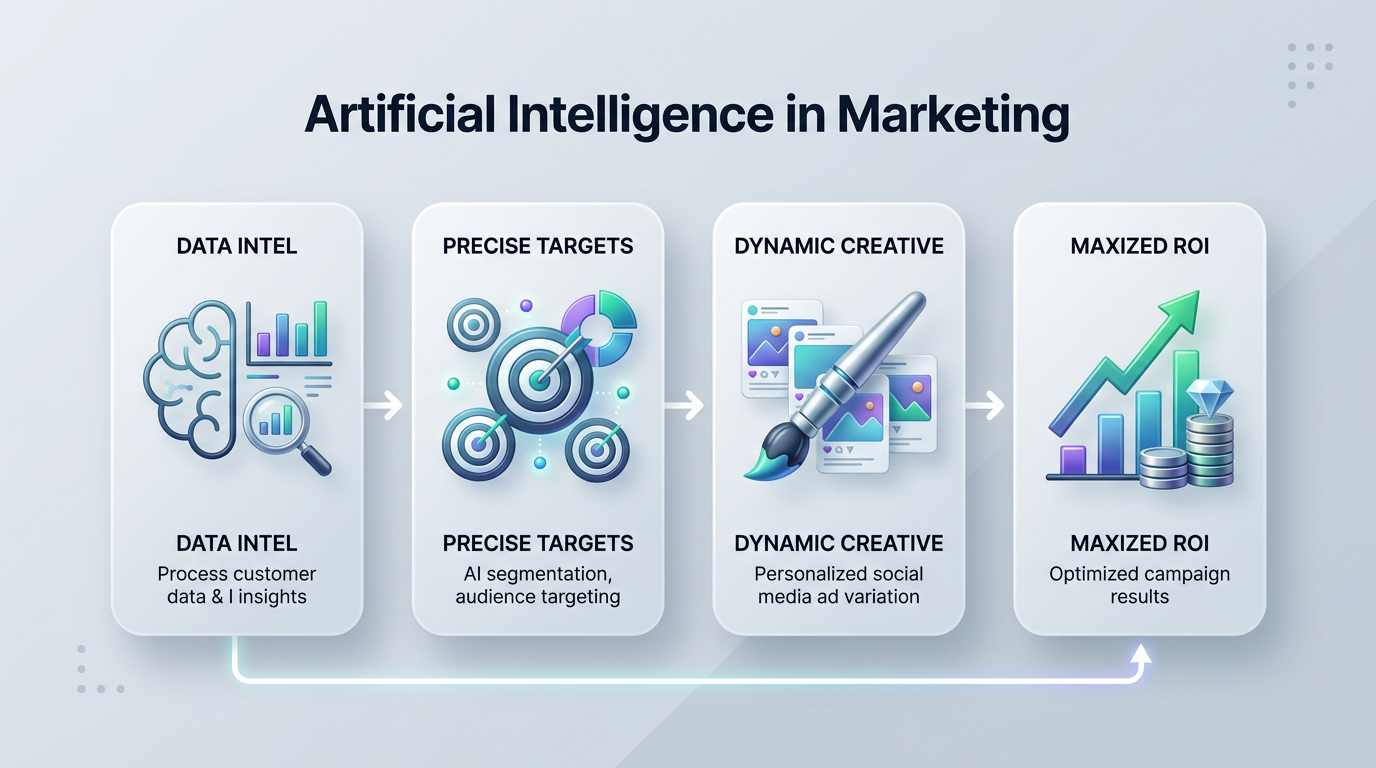
Core Categories of AI Tools Every Marketing Team Should Know
Not all AI tools do the same thing. Understanding the main categories helps you build a functional AI marketing stack without wasting budget on overlapping solutions.
Content Creation and Optimization Tools
These tools generate blog posts, social media captions, email copy, and ad variations. Examples include ChatGPT, Jasper, and Copy.ai. They work best when you provide clear prompts and use them to speed up first drafts rather than expecting perfect final copy.
The main benefit is volume. You can test more headlines, try different angles, and personalize content for multiple audience segments without hiring a larger writing team.
AI Tools for SEO and Search Visibility
AI-powered SEO tools analyze search intent, suggest content improvements, and predict ranking potential. Tools like Clearscope, Surfer SEO, and MarketMuse use natural language processing to compare your content against top-ranking pages and recommend semantic keywords and topic coverage.
These tools help you create content that satisfies both traditional search engines and AI-driven search platforms like ChatGPT, Perplexity, and Google’s Search Generative Experience.
TAMA specializes in this exact intersection, helping marketing teams optimize for both classic SEO and the emerging world of AI-powered search visibility.
Marketing Automation and Workflow Tools
Platforms like HubSpot, ActiveCampaign, and Marketo now include AI features that score leads, personalize email send times, and predict which prospects are most likely to convert. These tools reduce manual list segmentation and improve campaign performance through continuous optimization.
Workflow automation tools like Zapier and Make (formerly Integromat) also now offer AI-powered features that route data intelligently between your marketing apps.
Analytics and Reporting Tools
AI analytics tools like Google Analytics 4, Tableau with AI features, and specialized platforms like Improvado process large data sets to surface insights faster than manual analysis. They identify trends, anomalies, and opportunities that would take hours to spot in spreadsheets.
The best analytics tools also generate plain-language summaries, making it easier to share findings with stakeholders who do not want to interpret charts and graphs.
How to Choose the Right AI Tools for Your Marketing Goals
Selecting AI tools is not about chasing trends. It is about matching capabilities to your specific marketing challenges and existing workflows.
Start by identifying your biggest time sink or performance gap. If content production is your bottleneck, prioritize AI writing and content optimization tools. If campaign performance is inconsistent, look at AI-powered ad management or email personalization platforms.
Evaluate tools based on these criteria:
- Integration capability: Does it connect with your existing CRM, email platform, analytics tools, and content management system?
- Learning curve: Can your team start using it within days, or does it require weeks of training?
- Data requirements: Does it need large data sets to perform well, or does it work effectively with smaller data volumes?
- Output quality: Do the results require heavy editing, or are they usable with minor adjustments?
- Cost structure: Is pricing based on usage, seats, or flat monthly fees? Does it fit your budget at scale?
Avoid adopting multiple AI tools that overlap in function. This creates workflow confusion and inflates costs without improving results.
One practical approach is to start with one tool in each major category: one for content creation, one for SEO optimization, one for email personalization, and one for analytics. Test them for 60 to 90 days, measure impact on specific KPIs, then expand or replace based on performance.
Common Mistakes When Implementing AI Tools in Marketing
Most teams make predictable mistakes when adopting AI tools. Recognizing these pitfalls early saves time and budget.
The first mistake is expecting AI tools to work perfectly out of the box. Every tool requires prompt engineering, data integration, and workflow customization. If you treat an AI writing tool like a magic content generator, you will get generic output that sounds robotic and off-brand.
The second mistake is adopting too many tools at once. Marketing teams get excited about AI capabilities and sign up for five or six platforms simultaneously. This creates integration chaos, duplicates efforts, and makes it hard to measure which tools actually deliver value.
The third mistake is neglecting training. AI tools are only as good as the people using them. If your team does not understand how to write effective prompts, interpret AI recommendations, or refine AI-generated output, you will waste money on tools that sit unused.
The fourth mistake is ignoring data quality. AI tools depend on clean, structured data to make accurate predictions and recommendations. If your CRM data is messy, your lead scoring will be unreliable. If your content library is disorganized, your AI content tools will struggle to maintain brand consistency.
The fifth mistake is assuming AI tools eliminate the need for human judgment. AI can suggest headlines, predict trends, and automate tasks, but it cannot replace strategic thinking or creative intuition. The best marketing teams use AI tools to handle repetitive work so humans can focus on high-value decisions.
Building an Effective AI Marketing Workflow
An AI marketing workflow is not about replacing your current process. It is about identifying specific tasks where automation improves speed, consistency, or quality.
Start with a workflow audit. Map out your current marketing process from campaign planning to content creation to performance analysis. Identify steps that are repetitive, time-consuming, or prone to human error. These are your best candidates for AI automation.
For example, a typical content marketing workflow might include keyword research, outline creation, draft writing, editing, SEO optimization, publishing, and performance tracking. AI tools can assist at every stage:
| Workflow Stage | Manual Approach | AI-Assisted Approach |
|---|---|---|
| Keyword Research | Manual analysis of search volume and competition | AI tools suggest semantic keywords and content gaps |
| Outline Creation | Writer creates structure from scratch | AI generates outline based on top-ranking content |
| Draft Writing | Writer produces first draft over several hours | AI generates draft in minutes, writer refines and adds expertise |
| SEO Optimization | Manual keyword placement and readability checks | AI tools score content and suggest improvements in real time |
| Performance Tracking | Monthly manual review of analytics | AI monitors performance continuously and alerts to changes |
This table shows how AI tools complement human effort rather than replace it. The writer still provides strategic direction, brand voice, and expertise. The AI tools handle research, first drafts, and ongoing monitoring.
Once you identify where AI tools fit, create clear SOPs (standard operating procedures) for your team. Document how to use each tool, what prompts or settings work best, and how to quality-check AI output before it goes live.
Measuring ROI from AI Tools in Your Marketing Stack
Adopting AI tools costs money and time. You need to measure whether they deliver real business value.
Start by establishing baseline metrics before you implement any AI tool. If you are adopting an AI content tool, measure your current content output, time per piece, traffic per article, and conversion rates. If you are implementing an AI email tool, track current open rates, click rates, and revenue per email.
After 60 to 90 days, compare performance. Look for improvements in efficiency (time saved), output quality (engagement metrics), and business results (leads, revenue, customer acquisition cost).
Common ROI indicators for AI tools include:
- Reduction in time spent on repetitive tasks
- Increase in content output without hiring additional staff
- Improvement in campaign performance metrics like CTR, conversion rate, or ROAS
- Faster identification of high-value leads or customer segments
- Decrease in manual reporting time
If an AI tool does not show measurable improvement after a full evaluation period, either you are not using it correctly, or it is not the right fit for your needs. Do not keep paying for tools that do not deliver results.
TAMA helps marketing teams design AI workflows that directly tie tool adoption to revenue impact, ensuring every tool in your stack earns its place.
The Future of AI Tools in Marketing
AI capabilities in marketing software are evolving quickly. Understanding where the technology is headed helps you make smarter long-term decisions.
One major trend is the shift from standalone AI tools to AI features embedded in platforms you already use. Your email platform, CRM, and analytics tools are adding AI capabilities through regular updates. This reduces the need for separate point solutions and simplifies your marketing stack.
Another trend is the rise of AI orchestration platforms that connect multiple tools and automate entire workflows. Instead of manually moving data between your content tool, SEO platform, and CMS, orchestration platforms handle the entire process from keyword research to publishing and promotion.
Multimodal AI is also becoming more practical. Tools that can process text, images, video, and audio in a single workflow will enable more sophisticated content creation and personalization. Expect to see AI tools that can generate a blog post, create supporting social graphics, and produce a video summary from a single prompt.
Finally, AI tools are getting better at understanding brand voice and maintaining consistency across channels. Early AI writing tools produced generic content that needed heavy editing. Newer tools can learn your brand guidelines, adapt to your preferred tone, and generate content that sounds authentically like your company.
The marketing teams that succeed with AI will be those that treat these tools as collaborators rather than replacements. AI handles the repetitive and data-intensive work. Humans provide strategy, creativity, and judgment.
Frequently Asked Questions About AI Tools
What is the difference between AI tools and traditional marketing software?
Traditional marketing software follows fixed rules and workflows you configure manually. AI tools use machine learning to adapt based on data, improving performance over time without constant manual adjustments. For example, a traditional email tool sends messages based on schedules you set. An AI email tool analyzes recipient behavior and automatically adjusts send times, subject lines, and content to improve open and click rates.
Do I need technical skills to use AI tools for marketing?
Most modern AI tools are designed for marketers without technical backgrounds. They use simple interfaces, plain language prompts, and visual workflows. You do not need to understand the underlying algorithms to use them effectively. However, learning basic prompt engineering and understanding how to interpret AI recommendations will help you get better results faster.
How much do AI tools typically cost for marketing teams?
Pricing varies widely depending on the tool category and your usage level. Basic AI writing tools start around $30 to $50 per month per user. Enterprise-level AI marketing platforms can cost thousands per month. Many tools offer free trials or freemium tiers, allowing you to test functionality before committing to paid plans. Budget for AI tools as a percentage of your overall marketing spend, typically 5 to 15 percent depending on your automation goals.
Can AI tools replace human marketers?
No. AI tools excel at repetitive tasks, data analysis, and generating variations at scale. They cannot replace human creativity, strategic thinking, or the ability to understand nuanced customer needs. The best marketing results come from humans and AI working together. AI handles the time-consuming tasks, freeing marketers to focus on strategy, brand building, and relationship development.
How do I know if an AI tool is producing high-quality output?
Quality depends on three factors: the tool itself, how you configure and prompt it, and your evaluation criteria. Always review AI-generated content before publishing. Check for accuracy, brand voice alignment, and relevance to your audience. Use A/B testing to compare AI-assisted content against human-only content. Monitor engagement metrics like time on page, bounce rate, and conversion rate to measure real-world performance.
What happens to my data when I use AI tools?
Data privacy policies vary by tool. Most reputable AI platforms clarify whether they use your input data to train their models. Enterprise-grade tools typically offer data isolation, meaning your information stays private and is not used to improve the general model. Always review the privacy policy and terms of service before uploading sensitive customer data or proprietary information. Look for tools that comply with GDPR, CCPA, and other relevant data protection regulations.

Getting Started with AI Tools in Your Marketing Strategy
Adopting AI tools does not require a complete overhaul of your marketing process. Start small, measure results, and expand based on what works.
Identify one specific marketing challenge where automation would have the biggest impact. If content production is your bottleneck, start with an AI writing tool. If campaign performance is inconsistent, begin with an AI-powered ad optimization platform.
Choose one tool, implement it properly with clear workflows and team training, and measure its impact over 60 to 90 days. Once you see positive results, add a second tool in a different category.
The goal is not to automate everything. The goal is to free your team from repetitive tasks so they can focus on strategy, creativity, and building relationships with customers.
If you want expert guidance on building an AI-powered marketing system tailored to your business goals, request a free AI growth analysis from TAMA. We will help you identify the right tools, design effective workflows, and measure the results that matter most to your business.