AI Agents: How They Work and Why Your Marketing Needs Them

Marketing teams waste hours on tasks that AI agents could handle in seconds. Scheduling social posts. Responding to customer emails. Analyzing ad performance. Generating lead reports. Every one of these tasks steals time from strategy, creativity, and growth.
AI agents are autonomous software systems that complete tasks without human supervision. Unlike traditional automation, they adapt, learn, and make decisions. They handle repetitive work, respond to triggers, and optimize outcomes based on real-time data.
This guide explains how AI agents work, where they add the most value in marketing, and how to deploy them without disrupting your current workflow.
Table of contents
- What are AI agents?
- How AI agents differ from traditional automation
- Core capabilities of AI agents in marketing
- Practical use cases for AI agents
- AI agent tools and platforms
- Implementation steps
- Common mistakes to avoid
- Measuring AI agent performance
- Frequently asked questions about AI agents
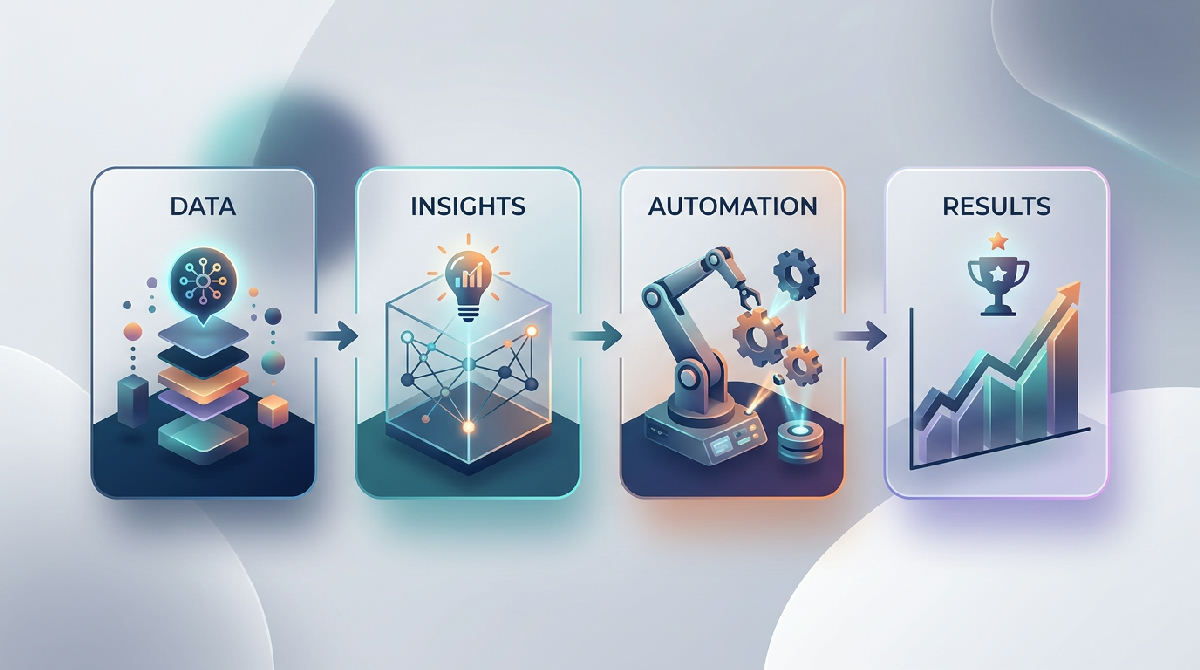
What are AI agents?
AI agents are intelligent software systems designed to perform tasks autonomously. They perceive inputs, make decisions, and take actions without constant human oversight. Think of them as digital employees who follow instructions, adapt to new information, and execute tasks based on predefined goals.
Traditional automation follows strict if-then rules. AI agents go further. They interpret context, respond to changing conditions, and improve over time. An AI agent can read an incoming email, determine intent, draft a personalized response, and send it without human input.
Marketing AI agents handle workflows like content generation, audience segmentation, ad optimization, lead scoring, customer service, and reporting. They work across platforms and tools, connecting data sources and executing multi-step processes.
Key characteristics of AI agents
AI agents share three defining traits. First, they operate autonomously. Once configured, they run without manual intervention. Second, they are goal-oriented. You define the objective, and the agent determines how to achieve it. Third, they adapt. AI agents respond to new data, adjust strategies, and refine outputs based on performance feedback.
This adaptability separates AI agents from basic automation. A standard email autoresponder sends the same message every time. An AI agent analyzes the inbound message, identifies the sender’s intent, and generates a unique reply tailored to the context.
How AI agents differ from traditional automation
Traditional marketing automation relies on predefined triggers and workflows. You map out every scenario in advance. If a contact downloads a whitepaper, send email A. If they open that email, wait two days and send email B. The logic is linear and rigid.
AI agents operate with flexibility. They interpret inputs, evaluate options, and choose actions dynamically. Instead of following a fixed path, they assess each situation and respond accordingly. This makes them effective in environments with variability, ambiguity, or complexity.
Automation versus intelligence
Automation executes tasks. AI agents solve problems. Automation requires explicit instructions for every possible scenario. AI agents generalize from examples and handle edge cases without manual programming.
Consider lead qualification. Traditional automation scores leads based on fixed criteria like job title, company size, or page visits. An AI agent analyzes behavioral patterns, engagement history, content preferences, and intent signals to predict conversion likelihood. It updates its scoring model as new data arrives.
This difference matters when marketing becomes complex. Simple workflows benefit from automation. Multi-variable decisions, personalization at scale, and real-time optimization benefit from AI agents.
Core capabilities of AI agents in marketing
AI agents bring four core capabilities to marketing teams: decision-making, natural language processing, integration, and continuous learning.
Decision-making
AI agents evaluate options and select actions based on objectives. They can decide which ad creative to show, which email subject line to test, or which lead to prioritize. They weigh variables like performance data, audience attributes, and contextual signals to make informed choices.
Natural language processing
AI agents understand and generate human language. They read customer messages, extract meaning, detect sentiment, and draft replies. They write product descriptions, ad copy, email sequences, and social posts. This capability enables conversational marketing, content generation, and customer support automation.
Integration
AI agents connect disparate tools and data sources. They pull information from your CRM, email platform, ad accounts, analytics dashboard, and content library. They push updates, trigger workflows, and synchronize data across systems. This creates unified workflows without manual data transfers.
Continuous learning
AI agents improve with use. They analyze outcomes, identify patterns, and refine strategies. An AI agent managing email campaigns tracks open rates, click rates, and conversions. It adjusts send times, subject lines, and content based on what performs best. Over time, it becomes more effective without additional training.
Practical use cases for AI agents
AI agents solve real marketing problems across content, campaigns, customer experience, and analytics. Here are specific examples where they deliver measurable value.
Content creation and optimization
AI agents generate blog outlines, social media posts, ad copy, and email drafts. They analyze top-performing content, identify themes, and produce variations aligned with brand voice. They optimize existing content by rewriting headlines, adjusting structure, or updating outdated information.
An AI agent can monitor your blog, identify articles with declining traffic, and suggest updates based on current search trends. It can draft the revisions and submit them for approval. This keeps content fresh without dedicated writing resources.
Lead qualification and nurturing
AI agents score leads based on engagement, firmographics, and behavior. They route high-value prospects to sales, enroll others in nurture sequences, and flag dormant contacts for re-engagement campaigns.
They personalize follow-up based on lead activity. If a prospect downloads a pricing guide, the agent sends a case study. If they visit the integrations page, it shares technical documentation. This relevance increases conversion without manual segmentation.
Ad campaign management
AI agents monitor ad performance across platforms, adjust bids, reallocate budgets, and pause underperforming creatives. They test variations, analyze results, and scale winners.
An AI agent managing Google Ads campaigns tracks cost per acquisition, adjusts keyword bids based on conversion data, and redistributes spend toward high-performing ad groups. It runs continuously, reacting faster than manual optimization.
Customer support and engagement
AI agents handle common support inquiries, troubleshoot issues, and escalate complex cases to human agents. They respond to questions via chat, email, or social media. They provide instant answers, reducing response times and improving satisfaction.
They also proactively engage customers. An AI agent detects when a user abandons a cart, sends a reminder with a personalized incentive, and tracks whether they complete the purchase. This recovers revenue without manual outreach.
Reporting and insights
AI agents compile performance data, generate reports, and surface insights. They pull metrics from multiple platforms, identify trends, and highlight anomalies. They summarize findings in plain language, making data accessible to non-technical stakeholders.
Instead of building dashboards manually, an AI agent delivers a weekly summary of campaign performance, customer acquisition costs, and conversion trends. It flags issues like rising bounce rates or declining engagement, prompting action before problems escalate.
AI agent tools and platforms
Several platforms enable marketing teams to deploy AI agents without deep technical expertise. These tools vary in complexity, integration options, and use case focus.
| Platform | Primary use case | Key strength |
|---|---|---|
| Claude Cowork | Team collaboration and workflow automation | Integrates with marketing tools for seamless task execution |
| Make | Multi-step workflow automation | Visual builder, extensive integrations |
| Zapier | App-to-app automation | Easy setup, wide platform support |
| Relevance AI | Custom AI agents | Flexible configuration, advanced logic |
| ActiveCampaign | Email and CRM automation | Built-in AI features for segmentation and personalization |
| HubSpot | Inbound marketing automation | Integrated CRM, content, and analytics |
The right platform depends on your marketing stack, technical resources, and workflow complexity. Teams with minimal technical support benefit from no-code tools like Zapier or Make. Organizations needing custom logic or advanced integrations may prefer platforms like Relevance AI or custom-built agents.
TAMA helps businesses evaluate, configure, and deploy AI agent platforms tailored to their goals and existing systems.
Implementation steps
Deploying AI agents requires planning, testing, and iteration. Follow these steps to ensure successful implementation.
Step 1: Identify high-impact workflows
Start with tasks that are repetitive, time-consuming, and rule-based. Good candidates include lead routing, email responses, social post scheduling, report generation, and ad bid adjustments. Avoid workflows requiring nuanced judgment or creative decision-making until you validate simpler use cases.
Step 2: Define success metrics
Establish clear goals before deployment. Metrics might include time saved, response speed, conversion rate, cost per lead, or customer satisfaction score. Concrete benchmarks help you measure impact and refine performance.
Step 3: Choose the right platform
Evaluate platforms based on integration capabilities, ease of use, scalability, and support. Test platforms with pilot projects before committing to enterprise-wide deployment. Prioritize tools that connect with your existing CRM, email platform, ad accounts, and analytics systems.
Step 4: Build and test agents
Configure your first AI agent with a narrow scope. Define inputs, decision logic, and outputs clearly. Test thoroughly before activating. Run simulations, review outputs, and refine prompts or rules as needed. Monitor early performance closely.
Step 5: Monitor and optimize
Track agent performance against your success metrics. Review outputs weekly during the first month. Adjust configurations based on results. Expand scope gradually as confidence builds. Document what works and what doesn’t to inform future deployments.
Step 6: Scale across workflows
Once initial agents prove effective, replicate successful patterns across other workflows. Prioritize workflows with similar characteristics. Share learnings across teams to accelerate adoption. Build a library of proven agent configurations for reuse.
Common mistakes to avoid
AI agent implementations fail when teams overlook critical details. Avoid these common pitfalls.
Overcomplicating initial deployments
Starting with complex, multi-step workflows increases failure risk. Simple tasks build confidence and provide quick wins. Master basic agents before tackling sophisticated use cases.
Skipping human oversight
AI agents need supervision, especially early on. Review outputs, validate decisions, and intervene when necessary. Fully autonomous agents work best after thorough testing and refinement.
Ignoring data quality
AI agents rely on clean, structured data. Poor data quality leads to incorrect decisions and unreliable outputs. Audit data sources before deployment. Fix inconsistencies, remove duplicates, and standardize formats.
Neglecting integration planning
AI agents must connect seamlessly with existing tools. Confirm integration capabilities before selecting a platform. Test data flows between systems. Address authentication, API limits, and data mapping issues early.
Failing to measure impact
Without clear metrics, you cannot assess value. Define success criteria upfront. Track performance consistently. Use data to justify investment and guide optimization.
Underestimating change management
Teams resist new tools when they disrupt familiar workflows. Communicate benefits clearly. Provide training. Involve users in configuration and testing. Address concerns proactively.
Measuring AI agent performance
Effective measurement ensures AI agents deliver value. Track both operational and business metrics.
Operational metrics
Operational metrics assess how well agents execute tasks. Key indicators include task completion rate, error rate, processing time, and uptime. These metrics reveal reliability and efficiency.
For example, an AI agent handling customer emails should maintain a high completion rate with minimal errors. Track how many emails it processes successfully versus how many require human intervention. Monitor average response time to ensure speed improvements.
Business metrics
Business metrics measure impact on revenue, cost, and growth. Examples include lead conversion rate, customer acquisition cost, campaign ROI, response time reduction, and time saved per week.
If an AI agent manages ad campaigns, track cost per acquisition and return on ad spend. Compare performance before and after deployment. Calculate time saved by automating manual optimizations. Translate time savings into cost savings or redeployed capacity.
Continuous improvement
Review performance data regularly. Identify patterns in errors or inefficiencies. Adjust agent configurations, refine prompts, or expand training data. AI agents improve with feedback. Treat deployment as an ongoing optimization process, not a one-time setup.
Share performance insights across teams. Document successful configurations. Build a knowledge base of best practices. This accelerates future deployments and maximizes ROI.
Frequently asked questions about AI agents
What is the difference between AI agents and chatbots?
Chatbots are a subset of AI agents focused on conversational interfaces. AI agents encompass a broader range of autonomous systems, including those that manage campaigns, analyze data, or execute workflows. Chatbots handle dialogue. AI agents handle tasks across multiple functions and platforms.
Do AI agents replace human marketers?
No. AI agents handle repetitive, data-intensive tasks, freeing human marketers to focus on strategy, creativity, and relationship-building. They augment capabilities rather than replace judgment. Successful marketing teams combine AI automation with human insight.
How much does it cost to implement AI agents?
Costs vary widely based on platform, scope, and customization. No-code tools like Zapier start around $20 per month. Enterprise platforms with advanced features may cost several hundred to several thousand dollars monthly. Custom-built agents require development resources. Factor in setup time, training, and ongoing optimization when budgeting.
Can AI agents integrate with my existing marketing stack?
Most AI agent platforms support popular marketing tools like HubSpot, Salesforce, Google Ads, Mailchimp, and Slack. Check integration documentation before committing. Platforms with open APIs offer the most flexibility. TAMA specializes in integrating AI agents with existing marketing systems.
How long does it take to see results from AI agents?
Simple agents deliver value within days. Complex workflows may take weeks to configure and optimize. Expect measurable impact within the first month for well-scoped projects. Continuous improvement extends value over time. Start small, measure early, and scale based on results.
Are AI agents suitable for small marketing teams?
Yes. Small teams benefit significantly from AI agents because they lack resources for manual execution. AI agents level the playing field, enabling small teams to compete with larger organizations. No-code platforms make deployment accessible without technical expertise.

Conclusion
AI agents transform marketing by automating decisions, personalizing experiences, and optimizing performance at scale. They handle repetitive tasks, respond intelligently to customer interactions, and free teams to focus on strategy and creativity. Success depends on clear goals, thoughtful implementation, and ongoing optimization.
Start with high-impact workflows, measure results rigorously, and expand gradually. AI agents are not a replacement for human marketers. They are a force multiplier that increases capacity, improves efficiency, and drives growth.
Ready to deploy AI agents in your marketing? TAMA helps businesses design, build, and optimize AI-powered workflows tailored to your goals. Request a free AI growth analysis to explore how AI agents can accelerate your marketing performance.
Related services
- AI Agents – autonomous AI agents working in your business
- AI Automation & Workflows – automate repetitive work end to end
- Custom AI Software – AI tools and software built for your business
FREE WEEKLY GROWTH TIPS
Increase your traffic, leads and revenue
One short email a week with an SEO or GEO tactic you can apply the same day, plus the checklists we use for clients. See what is working right now in Google and in ChatGPT.
Free. One email a week. No spam, unsubscribe anytime.
Want more content like this in your Google results?
Add us as a preferred source and Google will show you our articles more often.