AI Agency: 13 Questions to Ask Before You Hire One

Most businesses waste money hiring the wrong AI agency because they ask the wrong questions. They focus on buzzwords, not outcomes. They evaluate polish, not process. By the time they realize the agency cannot deliver what they promised, months have passed and budgets are burned.
An AI agency should help you automate marketing, improve decision-making, and scale growth without adding headcount. But not every agency that calls itself AI-powered can actually deliver those results. The difference between a strong partner and a weak one comes down to how they think, how they work, and what they prioritize.
This guide walks you through the exact questions you should ask before signing a contract. You will learn how to evaluate capabilities, avoid common red flags, and choose an agency that fits your business model and growth stage.
Table of contents
- What an AI agency actually does
- Why most businesses choose the wrong AI agency
- 13 questions to ask before hiring an AI agency
- How to evaluate AI agency pricing models
- Red flags to watch for during discovery calls
- How to measure success with an AI agency
- Frequently asked questions about AI agencies
What an AI agency actually does
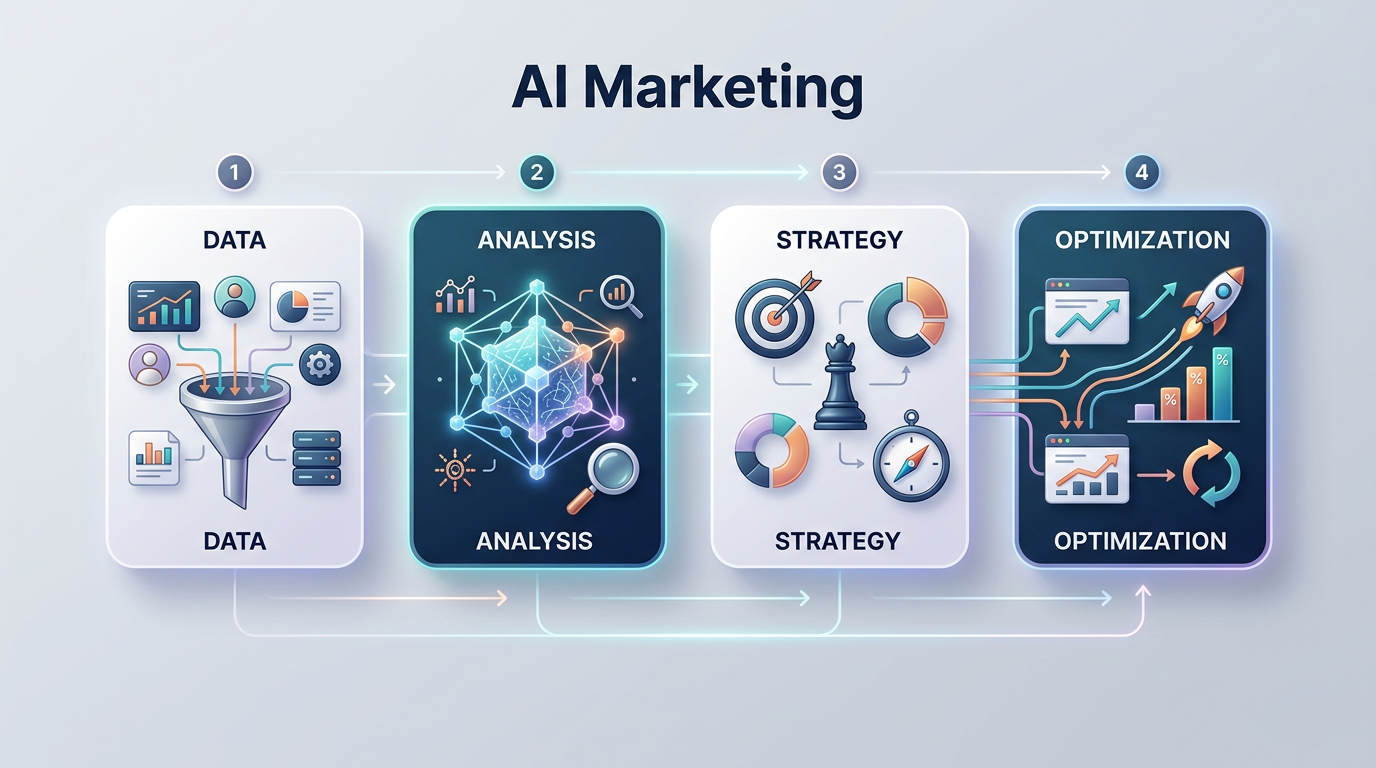
An AI agency builds systems that automate repetitive marketing tasks, improve targeting accuracy, and scale personalized outreach. The best agencies combine marketing strategy with AI implementation. They do not just recommend tools. They configure workflows, train models, integrate platforms, and measure results.
Common services include AI-powered content production, automated lead scoring, predictive analytics for ad targeting, chatbot deployment, email personalization at scale, and SEO automation. Some agencies also build custom agentic workflows that connect multiple tools and trigger actions based on user behavior or business rules.
The key difference between a traditional marketing agency and an AI agency is depth of automation. Traditional agencies execute campaigns manually. AI agencies design systems that run campaigns autonomously, learn from performance data, and adjust strategy without constant human input.
Why most businesses choose the wrong AI agency
Most businesses make one of three mistakes when hiring an AI agency. They choose based on price alone, portfolio aesthetics, or how confidently the sales team speaks. None of those factors predict success.
Price is misleading because cheap agencies often lack the technical depth to build reliable systems. Expensive agencies sometimes overpromise and underdeliver because they rely on junior teams or outsourced contractors. The best agencies price based on value delivered, not hours worked.
Portfolios can be misleading too. A polished case study does not prove the agency can replicate results for your business model, industry, audience, or growth stage. Ask for references in your vertical. Ask what did not work. Ask how they handled setbacks.
Confidence is not competence. Agencies that promise guaranteed results, instant ROI, or plug-and-play solutions are usually selling hype. Real AI implementation takes testing, iteration, and alignment between marketing strategy and technical execution.
13 questions to ask before hiring an AI agency
These questions separate strong agencies from weak ones. Use them during discovery calls, proposal reviews, and contract negotiations. Pay attention to how the agency answers, not just what they say.
Question 1: What AI tools and platforms do you actually use?
Ask for specifics. The agency should name tools, explain why they chose them, and describe how they integrate those tools into client workflows. Avoid agencies that speak in generalities or claim they use “proprietary AI” without explaining what that means.
Strong answers include mentions of platforms like Make, Zapier, n8n, OpenAI API, Claude API, Perplexity API, HubSpot, ActiveCampaign, Ahrefs, SEMrush, SurferSEO, Jasper, or custom-built agents. Weak answers include vague claims like “we use the latest AI” or “we have our own system.”
Question 2: Can you show me a workflow you built for a similar business?
Ask to see a real workflow diagram, automation sequence, or agentic flow they designed for a business in your industry or with a similar business model. This reveals whether they understand your challenges and whether they can translate strategy into execution.
If the agency cannot show you anything, they may lack real implementation experience. If they show you something generic, they may not customize solutions. If they show you something complex and explain it clearly, that is a good sign.
Question 3: How do you measure success?
Strong agencies define success in business terms, not vanity metrics. They should talk about revenue growth, cost per acquisition, customer lifetime value, conversion rate improvements, time saved, or lead quality improvements. Weak agencies focus on impressions, clicks, or traffic without tying those metrics to outcomes.
Ask what KPIs they track, how often they report, and what benchmarks they use. Ask how they know when a campaign or workflow is underperforming. Ask what they do when results stall.
Question 4: What happens when something breaks?
AI systems fail. APIs change. Integrations break. Models drift. Automations stop working. The question is not whether something will go wrong. The question is how the agency responds when it does.
Ask about their monitoring process, response time, and escalation protocol. Ask whether they provide support after launch. Ask whether ongoing maintenance is included or billed separately. Avoid agencies that treat implementation as a one-time project with no follow-up.
Question 5: Who will actually do the work?
Some agencies sell senior expertise but deliver junior execution. Ask who will build your workflows, write your prompts, configure your integrations, and analyze your results. Ask whether those people will be employees or contractors. Ask how many other clients they are working on simultaneously.
If the agency cannot or will not answer, that is a red flag. If they promise a dedicated team but cannot name the team members, that is another red flag. If they describe a clear team structure with defined roles and realistic workloads, that is a good sign.
Question 6: How do you handle data privacy and compliance?
AI systems often process customer data, behavioral signals, and proprietary business information. Ask how the agency protects that data. Ask whether they sign NDAs. Ask whether they comply with GDPR, CCPA, or other regional regulations. Ask whether they store data, where they store it, and how long they keep it.
Weak agencies dismiss this question or say “we follow best practices.” Strong agencies explain their policies clearly, provide documentation, and adjust processes to meet your compliance requirements.
Question 7: What is your onboarding process?
Onboarding reveals how organized and process-driven the agency is. Ask what happens in the first 30 days. Ask what information they need from you. Ask how they audit your current systems, map your workflows, and identify opportunities for automation.
Strong agencies have a structured onboarding process with clear milestones, deliverables, and timelines. Weak agencies start building before they understand your business, which leads to misalignment and wasted effort.
Question 8: Do you build custom solutions or use templates?
Some agencies rely on templates and plug-and-play systems. That works for simple use cases, but it limits flexibility and scalability. Ask whether they customize workflows for your business model, audience, and goals. Ask how much of the work is templated versus bespoke.
Neither approach is inherently better. Templates save time and cost. Custom builds offer more control and differentiation. The key is alignment. If your needs are straightforward, templates work. If your business model is unique, you need custom solutions.
Question 9: How do you train our team to use the systems you build?
AI systems only deliver value if your team can use them. Ask whether training is included. Ask what format it takes. Ask whether they provide documentation, video walkthroughs, or live sessions. Ask whether they offer ongoing support after training ends.
Agencies that build systems without training create dependency. You pay them every time something needs adjustment. Agencies that train your team empower you to iterate, optimize, and scale independently.
Question 10: What is your refund or exit policy?
Not every partnership works. Ask what happens if you are not satisfied after the first month, quarter, or project phase. Ask whether you can pause or cancel the contract. Ask what you own when the contract ends.
Strong agencies have fair exit terms because they are confident in their work. Weak agencies lock clients into long contracts with no flexibility because they know retention is a problem.
Question 11: Can you provide references from current or past clients?
Ask for at least two references, ideally from businesses similar to yours. Ask the agency what questions you should ask those references. Ask whether the references are recent. Ask whether the projects were successful.
Then call the references. Ask what worked, what did not, how the agency handled problems, and whether they would hire them again. Ask what surprised them. Ask what they wish they had known before signing.
Question 12: How do you stay current with AI developments?
AI changes fast. Tools improve. New platforms launch. Strategies evolve. Ask how the agency keeps up. Ask what newsletters they read, what communities they participate in, what conferences they attend, and what experiments they run.
Strong agencies treat learning as part of the job. They test new tools, share insights publicly, and adjust client strategies when better approaches emerge. Weak agencies rely on outdated playbooks and resist change.
Question 13: What is one thing you will not do for us?
This question reveals boundaries, focus, and honesty. Strong agencies know their limits. They say no to projects outside their expertise. They refer clients to better-suited partners. They set realistic expectations.
Weak agencies say yes to everything because they prioritize closing deals over delivering results. If an agency cannot name something they will not do, they probably do not have a clear positioning or process.
How to evaluate AI agency pricing models
AI agency pricing varies widely. Some charge hourly rates between $100 and $300 per hour. Some charge fixed project fees ranging from $5,000 to $50,000 depending on scope. Some charge monthly retainers between $3,000 and $15,000 for ongoing optimization and support.
Hourly pricing works for short-term projects or consulting engagements. It offers flexibility but makes budgeting harder. You pay for time, not outcomes. If the agency is inefficient, you pay more.
Project-based pricing works for defined deliverables like building a lead scoring system, automating a content pipeline, or launching an agentic workflow. It offers predictability but limits flexibility. If scope changes, you renegotiate.
Retainer pricing works for ongoing optimization, monitoring, and iteration. It aligns incentives because the agency succeeds when you succeed. It offers continuity but requires trust. If the agency underdelivers, you waste money every month.
| Pricing model | Best for | Pros | Cons |
|---|---|---|---|
| Hourly | Short projects | Flexible, pay as you go | Hard to budget, inefficiency risk |
| Project-based | Defined deliverables | Clear scope, predictable cost | Scope creep risks, less flexibility |
| Monthly retainer | Ongoing optimization | Continuous improvement, aligned incentives | Requires trust, monthly commitment |
The best pricing model depends on your needs, budget, and timeline. If you need a one-time system built, choose project-based pricing. If you need continuous optimization and support, choose a retainer. If you are testing an agency before committing, start with a small project or pilot phase.
Red flags to watch for during discovery calls
Some warning signs appear early. Pay attention during discovery calls, proposals, and contract negotiations. These red flags suggest the agency may not deliver what they promise.
Red flag one: the agency guarantees results. No agency can guarantee outcomes because marketing performance depends on factors outside their control, including product-market fit, pricing, competition, and market timing. Agencies that promise guaranteed ROI or guaranteed rankings are either inexperienced or dishonest.
Red flag two: the agency avoids talking about past failures. Every agency has projects that underperformed. Strong agencies discuss what went wrong, what they learned, and how they adjusted. Agencies that claim they never fail are lying or lack self-awareness.
Red flag three: the agency focuses only on tools, not strategy. AI tools are powerful, but they do not replace strategy. Agencies that sell tools without understanding your business model, audience, or goals will build systems that do not align with your objectives.
Red flag four: the agency rushes the sales process. Strong agencies take time to understand your needs, ask questions, and propose solutions that fit your situation. Agencies that pressure you to sign quickly care more about closing deals than delivering results.
Red flag five: the agency cannot explain their process clearly. If the agency cannot explain how they work, what they deliver, and how they measure success, they probably do not have a reliable process. Complexity is not an excuse for confusion.
How to measure success with an AI agency
Success metrics depend on what you hired the agency to do. If you hired them to automate lead generation, measure lead volume, lead quality, cost per lead, and conversion rate. If you hired them to scale content production, measure content output, traffic growth, engagement, and ranking improvements. If you hired them to optimize ad campaigns, measure ROAS, CPA, and customer acquisition cost.
Set baseline metrics before the agency starts work. Agree on target metrics and timelines during onboarding. Review performance monthly or quarterly depending on the engagement length. Adjust strategy when results stall or when new opportunities emerge.
Strong agencies proactively share performance data, explain what is working, and recommend next steps. Weak agencies hide behind vanity metrics, avoid accountability, and blame external factors when results disappoint.
Beyond quantitative metrics, evaluate qualitative factors. Is the agency responsive? Do they communicate clearly? Do they anticipate problems before they become crises? Do they bring new ideas to the table? Do they treat your business like it matters?
If the agency delivers strong results but poor communication, address the communication issue. If the agency delivers poor results despite strong communication, consider ending the partnership. Results matter more than rapport, but both matter.
Frequently asked questions about AI agencies
How much does it cost to hire an AI agency?
Most AI agencies charge between $3,000 and $15,000 per month for retainer-based services. Project-based pricing ranges from $5,000 to $50,000 depending on scope and complexity. Hourly rates typically fall between $100 and $300 per hour. Pricing depends on the agency’s expertise, location, team size, and the complexity of the work. Expect higher costs for custom automation, multi-platform integrations, and ongoing optimization compared to template-based solutions.
What industries do AI agencies typically serve?
AI agencies serve a wide range of industries, including SaaS, ecommerce, professional services, real estate, healthcare, finance, education, and B2B manufacturing. The best agencies specialize in specific verticals because marketing challenges, buyer behavior, and compliance requirements vary significantly across industries. Ask whether the agency has experience in your industry and request case studies or references from similar businesses before signing a contract.
How long does it take to see results from an AI agency?
Most businesses see initial results within 30 to 90 days, depending on the scope of work. Simple automations like email sequences or chatbot deployment can deliver results within weeks. Complex projects like AI SEO strategies, predictive analytics models, or custom agentic workflows may take three to six months to show measurable impact. Set realistic expectations during onboarding and agree on short-term milestones so you can evaluate progress before committing to long-term contracts.
Can an AI agency replace my in-house marketing team?
An AI agency can augment your team by automating repetitive tasks, improving targeting accuracy, and scaling execution, but they should not replace strategic marketing leadership. In-house teams understand your brand, product, customers, and culture better than any external partner. The best approach combines internal strategy with external execution. Use the agency to build systems, automate workflows, and scale campaigns while keeping strategic decisions in-house.
What is the difference between an AI agency and a traditional marketing agency?
Traditional marketing agencies rely heavily on manual execution. They plan campaigns, create content, manage ads, and analyze performance using human-driven processes. AI agencies automate many of those tasks using machine learning, natural language processing, workflow automation, and predictive analytics. This allows them to scale campaigns faster, personalize messaging at scale, and optimize performance in real time. However, AI agencies still require human oversight for strategy, creative direction, and quality control.
How do I know if my business is ready for an AI agency?
You are ready for an AI agency if you have repeatable marketing processes that consume significant time, if you need to scale personalization beyond what your team can handle manually, or if you want to improve targeting accuracy and reduce wasted ad spend. You are not ready if your marketing strategy is unclear, if you lack baseline performance data, or if your business model is still evolving rapidly. AI amplifies good strategy but cannot fix broken fundamentals.

Conclusion
Hiring the right AI agency starts with asking better questions. Focus on process, not promises. Evaluate experience, not enthusiasm. Prioritize alignment over aesthetics. The agency you choose should understand your business, build systems that scale, and measure success in outcomes, not activity.
If you are ready to explore how AI can scale your marketing without adding headcount, TAMA offers a free AI growth analysis. We audit your current systems, identify automation opportunities, and map a clear implementation plan tailored to your business model. Visit our website to get started.