

Agentic Flows: How AI Workflows Drive Marketing Growth

Most marketing automation tools follow simple if-then rules. They send an email when someone downloads a lead magnet. They tag a contact when they visit a pricing page. They trigger a reminder when a cart is abandoned.
But what happens when your prospects need more than a single action? What if they need a sequence of decisions, research, outreach, and follow-up that adapts based on real-time behavior and intent signals?
That’s where agentic flows come in. Agentic flows are multi-step AI workflows that act, decide, and adjust without manual intervention. They combine automation with intelligence. Instead of waiting for you to set up every rule, they evaluate context, prioritize leads, personalize messaging, and execute tasks across channels.
Table of contents
- What are agentic flows in marketing?
- How agentic flows differ from traditional automation
- How agentic flows work in marketing
- Benefits of agentic flows for marketers
- Common use cases for agentic flows
- How to build your first agentic flow
- Mistakes to avoid when implementing agentic flows
- Conclusion
- Frequently asked questions about agentic flows
What are agentic flows in marketing
Agentic flows are automated sequences that use AI agents to make decisions, take actions, and adapt based on real-time data. Unlike static workflows that follow rigid paths, agentic flows evaluate context at every step.
An agentic flow can analyze a prospect’s behavior, decide which content to send, determine the best time to follow up, and even adjust messaging tone based on engagement patterns. It acts like a member of your team who works around the clock.
What makes a flow agentic
A flow becomes agentic when it includes decision-making logic powered by AI. Traditional workflows say “if X happens, do Y.” Agentic flows say “if X happens, evaluate Y, Z, and A, then choose the best next action based on the goal.”
This requires integrating AI models that can interpret intent, score leads, generate personalized content, and route tasks dynamically. Tools like Make, Zapier, and custom API setups often power these workflows.
Why agentic flows matter now
Buyers expect personalization. They want relevant content at the right moment. They abandon journeys that feel generic or slow.
Manual personalization doesn’t scale. Rule-based automation breaks when exceptions arise. Agentic flows solve both problems by combining speed with intelligence.
How agentic flows differ from traditional automation
Traditional marketing automation relies on predetermined triggers and actions. You set up a sequence, define the rules, and the system executes them exactly as written.
Agentic flows add a layer of reasoning. They evaluate inputs, weigh options, and choose actions dynamically. This makes them more flexible and more powerful.
Decision-making versus rule-following
A traditional workflow might say “send email B if the contact opened email A.” An agentic flow says “analyze engagement with email A, score the contact’s intent, check recent website activity, then decide whether to send email B, email C, or escalate to sales.”
This distinction matters when prospects behave unpredictably or when your goals require nuance.
Adaptability and learning
Agentic flows can improve over time. By tracking outcomes and feeding performance data back into the decision logic, they learn which actions drive results.
Some advanced setups use machine learning models that adjust scoring thresholds, messaging strategies, and timing based on historical performance.
How agentic flows work in marketing
Agentic flows operate across the entire marketing funnel. They help with lead capture, nurturing, qualification, conversion, and retention.
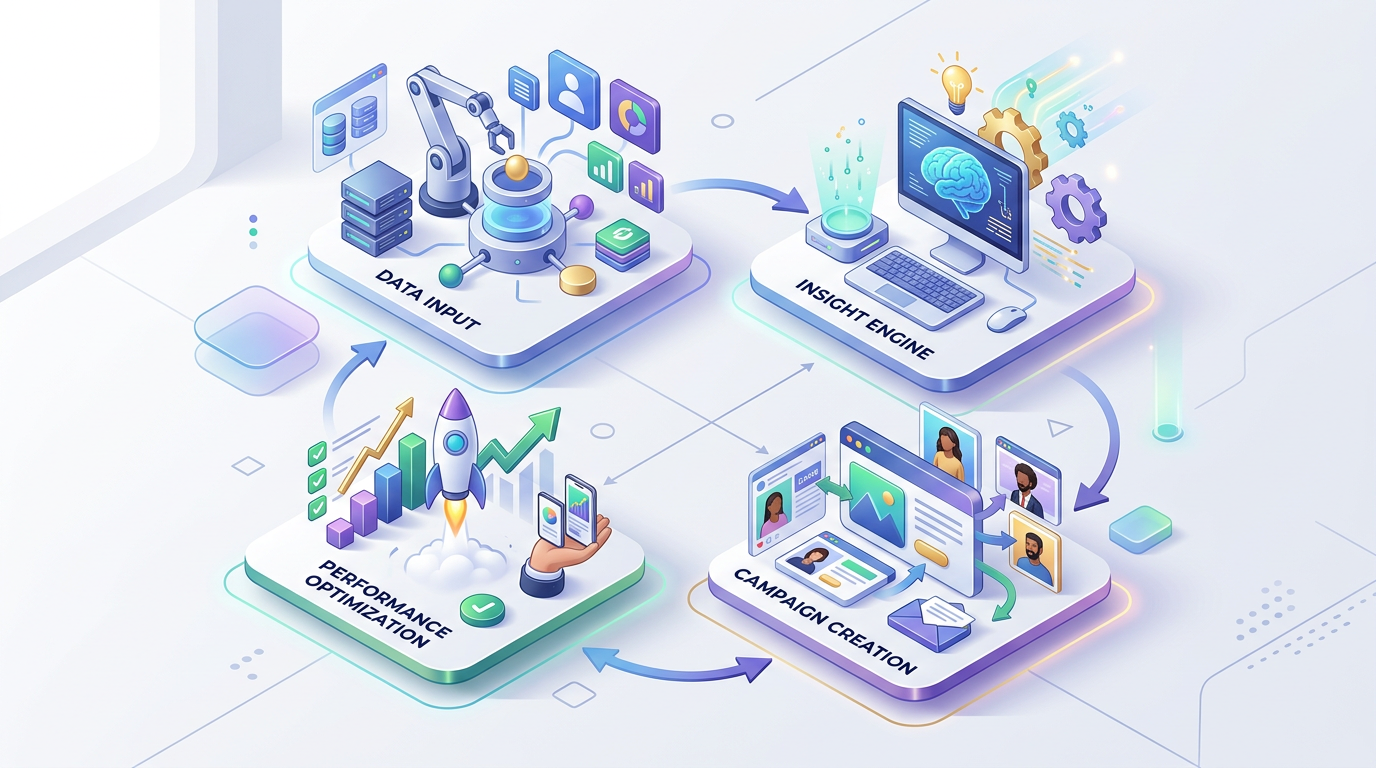
Here’s a typical structure: A prospect takes an action. The flow evaluates the action and surrounding context. An AI agent decides the next step. The system executes the action. The flow monitors the result and adapts.
Core components of an agentic flow
Every agentic flow includes triggers, decision nodes, action nodes, and feedback loops.
- Triggers initiate the flow, such as form submissions, page visits, or email opens.
- Decision nodes use AI to evaluate data and choose the next step.
- Action nodes execute tasks like sending emails, updating CRM records, or notifying sales.
- Feedback loops track outcomes and refine future decisions.
Example flow: lead nurture to sales handoff
A prospect downloads a guide. The flow scores their fit based on company size, industry, and role. If the score is high, the flow sends a personalized follow-up email with case studies. If the prospect opens the email and visits the pricing page, the flow notifies sales and schedules a demo invite. If engagement drops, the flow pauses and re-engages with a different asset two days later.
This entire sequence runs without manual intervention. The AI decides when to escalate, when to wait, and what content to send.
Benefits of agentic flows for marketers
Agentic flows save time, improve relevance, and increase conversions. They let small teams operate like large teams by handling repetitive decisions at scale.
Faster response times
Agentic flows act instantly. When a high-intent lead visits your site, the flow can trigger outreach within seconds. Speed matters in competitive markets.
Better personalization
Instead of sending the same email to every lead, agentic flows tailor content based on behavior, firmographics, and engagement history. This increases open rates, click rates, and reply rates.
Reduced manual work
Marketing teams spend hours triaging leads, updating records, and deciding who to follow up with. Agentic flows handle these tasks automatically, freeing teams to focus on strategy and creative work.
Scalability without headcount
As your audience grows, agentic flows scale with you. They handle 10 leads or 10,000 leads with the same level of attention and speed.
For more on how agentic flows drive revenue, see how AI-powered marketing sequences drive real revenue growth.
Common use cases for agentic flows
Agentic flows work across industries and marketing functions. Here are the most common applications.
Lead scoring and qualification
Agentic flows analyze behavioral signals, firmographic data, and engagement patterns to score leads in real time. High-scoring leads get routed to sales. Low-scoring leads stay in nurture.
Content personalization
Instead of sending generic newsletters, agentic flows select content based on each contact’s interests, stage, and past behavior. This increases engagement and builds trust.
Sales outreach automation
Agentic flows can draft personalized sales emails, schedule follow-ups, and adjust messaging based on reply sentiment. They act as a virtual SDR.
Customer onboarding
After a customer signs up, agentic flows guide them through setup, recommend features, and intervene when adoption stalls. This reduces churn and accelerates time to value.
Re-engagement campaigns
When contacts go quiet, agentic flows test different messaging angles, content formats, and timing strategies to win them back.
To explore how multi-step AI workflows convert, read how to build multi-step AI workflows that actually convert.
How to build your first agentic flow
Building an agentic flow requires planning, tooling, and iteration. Start small and expand as you learn what works.
Step 1: Define the goal
Choose one clear outcome you want the flow to achieve. Examples include qualifying inbound leads, nurturing cold contacts, or accelerating trial-to-paid conversions.
Step 2: Map the decision points
Identify where AI-driven decisions will improve the flow. Ask: Where do I currently make manual judgments? Where do outcomes vary based on context?
Step 3: Choose your tools
You’ll need a workflow platform like Make or Zapier, a CRM or data layer, and access to AI APIs such as OpenAI or Anthropic. Some teams also use lead scoring tools or enrichment APIs.
Step 4: Build the flow
Start with a simple version. Connect your trigger, add one decision node powered by AI, and execute one action. Test it thoroughly before adding complexity.
Step 5: Monitor and refine
Track key metrics like conversion rate, response time, and lead quality. Adjust decision logic, messaging, and timing based on performance data.
For more on AI-driven marketing automation, explore AI tools for marketing automation.
Mistakes to avoid when implementing agentic flows
Agentic flows offer huge potential, but common mistakes can undermine results.
Overcomplicating the flow
Don’t try to automate everything at once. Start with one high-impact use case and expand gradually.
Ignoring data quality
Agentic flows rely on accurate data. If your CRM is messy or your tracking is incomplete, the flow will make poor decisions. Clean your data first.
Skipping human review
Even the best AI makes mistakes. Build review checkpoints into your flow, especially for high-stakes actions like sales handoffs or customer outreach.
Failing to measure outcomes
If you don’t track what works, you can’t improve. Set clear KPIs and review flow performance regularly.
Using AI for the wrong tasks
AI excels at evaluation, prioritization, and personalization. It’s less reliable for highly creative tasks or tasks requiring deep domain expertise. Know where to apply it.
Conclusion
Agentic flows represent the next evolution in marketing automation. They combine the speed of automation with the intelligence of AI, enabling marketers to deliver personalized, timely, and relevant experiences at scale.
The key is to start small, focus on high-impact use cases, and iterate based on real performance data. Whether you’re qualifying leads, nurturing prospects, or onboarding customers, agentic flows can help you do it faster and better.
Ready to build smarter marketing workflows? Request a free AI growth analysis at TAMA and discover how agentic flows can transform your marketing.

Frequently asked questions about agentic flows
What is the difference between agentic flows and regular automation?
Regular automation follows fixed rules. Agentic flows use AI to make decisions at each step, adapting based on context and real-time data. This makes them more flexible and intelligent.
Do I need coding skills to build agentic flows?
Not necessarily. Many no-code and low-code platforms like Make and Zapier support agentic workflows through integrations with AI APIs. However, more complex flows may require custom development.
How much does it cost to implement agentic flows?
Costs vary based on tools, data volume, and complexity. Basic setups using platforms like Zapier and OpenAI can start around $100 per month. Enterprise implementations with custom logic and integrations can cost significantly more.
Can agentic flows replace my marketing team?
No. Agentic flows handle repetitive decisions and tasks, but they don’t replace strategic thinking, creativity, or relationship building. They amplify your team’s effectiveness.
What metrics should I track for agentic flows?
Focus on conversion rate, lead quality, response time, engagement rate, and cost per acquisition. Also monitor AI decision accuracy and flow completion rates to identify bottlenecks.
Are agentic flows suitable for small businesses?
Yes. Small businesses benefit the most because agentic flows let them compete with larger teams. Start with one high-impact use case and scale as you see results.


