AI Agents: How to Deploy Intelligent Marketing Assistants That Work 24/7

Most marketing teams are buried under repetitive work: answering the same customer questions, qualifying leads manually, updating spreadsheets, and chasing down data across disconnected tools. You know the work needs to get done, but it pulls focus from strategy, creative thinking, and growth.
AI agents solve this problem by acting as intelligent assistants that can execute tasks, make decisions based on rules you define, and work continuously without supervision. Unlike simple automation that follows rigid if-then logic, AI agents adapt, learn from context, and handle complex workflows across multiple systems.
This guide explains what AI agents actually are, how they differ from basic automation, where they add the most value in marketing, and how to deploy them without overhauling your entire stack.
What Are AI Agents in Marketing?
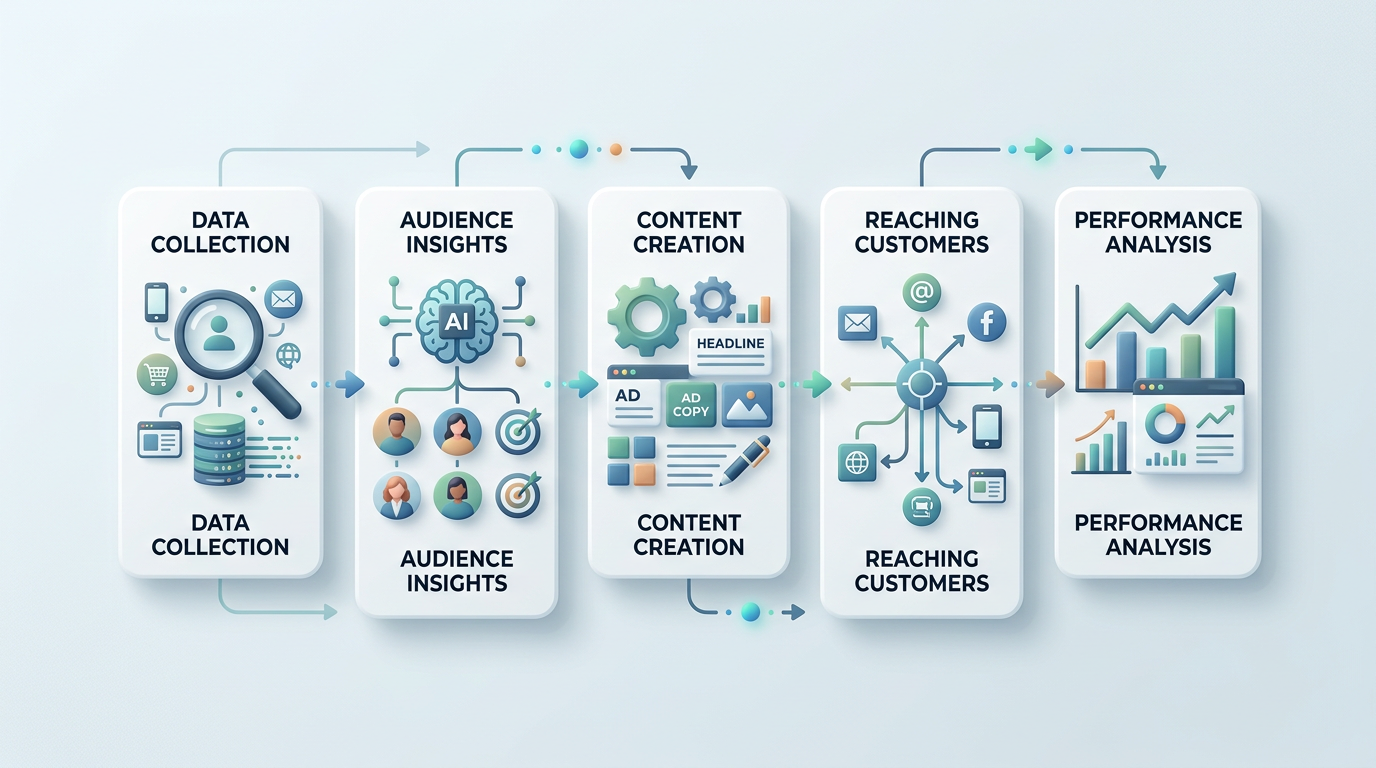
An AI agent is software that can perceive its environment, make decisions based on data and instructions, and take action to achieve a specific goal. In marketing, that means an agent can monitor incoming leads, score them based on behavior and fit, route them to the right salesperson, send personalized follow-up messages, update your CRM, and trigger the next step in a campaign, all without manual intervention.
Unlike traditional marketing automation, which executes predefined sequences, AI agents use natural language understanding, predictive models, and real-time context to make smarter decisions. They can interpret unstructured data like customer emails, chat messages, and support tickets, then respond appropriately or escalate when needed.
Think of an AI agent as a team member who never sleeps, works across every channel simultaneously, and improves over time as it processes more data. It handles the repetitive, time-consuming work so your human team can focus on strategy, creativity, and relationship building.
AI agents are already being used for lead qualification, customer support triage, content personalization, ad budget optimization, and outreach sequencing. The technology is mature enough to deploy today, and the ROI is measurable within weeks.
How AI Agents Differ from Basic Marketing Automation
Traditional marketing automation tools like HubSpot, Mailchimp, or Marketo execute workflows you design in advance. You define triggers, conditions, and actions. The system follows those instructions exactly. If a lead downloads an ebook, send email A. If they click, send email B. If they don’t, wait three days and send email C.
This works well for simple, linear journeys. But it breaks down when customer behavior becomes unpredictable, when you need to synthesize data from multiple sources, or when the next-best action depends on nuanced context.
AI agents, by contrast, can interpret intent, predict outcomes, and adapt their behavior in real time. They don’t just follow a flowchart. They evaluate the situation, reference historical patterns, apply rules you’ve set, and choose the best course of action dynamically.
Key Differences Between Automation and AI Agents
| Feature | Traditional Automation | AI Agents |
|---|---|---|
| Decision Logic | Fixed, rule-based | Adaptive, context-aware |
| Data Input | Structured fields only | Structured and unstructured data |
| Learning | No learning capability | Improves over time with feedback |
| Task Complexity | Simple, single-step tasks | Multi-step, cross-platform workflows |
| Personalization | Template-based | Dynamic, individual-level |
The most powerful use cases emerge when you combine both. Use traditional automation for stable, high-volume workflows, and deploy AI agents where decisions require judgment, context, or synthesis across multiple signals.
Where AI Agents Add the Most Value in Marketing
Not every marketing task needs an AI agent. Start by identifying bottlenecks where manual work is repetitive, time-consuming, and difficult to scale with traditional automation.
Lead Qualification and Routing
AI agents can analyze inbound leads in real time, score them based on firmographic data, behavioral signals, and engagement history, then route qualified leads to the right salesperson or nurture sequence. They can also draft personalized outreach messages that reference the lead’s specific context, company, and pain points.
This eliminates the delay between form submission and first contact, increases response rates, and ensures high-value leads get immediate attention while low-fit leads are nurtured automatically.
Customer Support and Chat Assistance
AI agents can handle tier-one support requests, answer frequently asked questions, troubleshoot common issues, and escalate complex cases to human agents with full context. They work across chat, email, and social media, providing consistent responses 24/7.
This reduces support ticket volume, shortens response times, and frees your team to focus on high-touch customer success work.
Content Personalization at Scale
AI agents can dynamically adjust website copy, email content, ad creative, and product recommendations based on individual user behavior, preferences, and stage in the buyer journey. They test variations automatically and optimize toward conversion goals without manual A/B test setup.
This level of personalization was previously only feasible for enterprise brands with dedicated data science teams. AI agents make it accessible to mid-market companies and lean marketing teams.
Ad Campaign Optimization
AI agents can monitor ad performance across Google Ads, Meta, LinkedIn, and other platforms, adjust bids in real time, pause underperforming creative, allocate budget toward high-performing segments, and generate new ad copy variations based on what’s working.
Tools like AI-powered Google Ads platforms already offer this capability, but custom agents can extend it across your entire paid media stack and integrate tightly with your CRM and attribution models.
Sales Outreach and Follow-Up
AI agents can draft personalized cold emails, follow up with prospects who haven’t responded, schedule meetings, and update your CRM automatically. They can reference recent news about the prospect’s company, mutual connections, or relevant case studies to increase reply rates.
This is especially valuable for outbound sales teams managing hundreds of prospects simultaneously. The agent handles the repetitive follow-up work while the human salesperson focuses on high-value conversations.
How to Build and Deploy AI Agents for Marketing
Deploying AI agents doesn’t require a full platform migration or a six-month implementation project. You can start with a single high-impact use case, validate ROI, then expand gradually.
Here’s a practical deployment framework:
- Identify the bottleneck: Choose one repetitive, time-consuming task that currently requires manual work. Lead qualification, customer support triage, and ad optimization are good starting points.
- Define success criteria: Set clear KPIs. For lead qualification, that might be time-to-first-response, qualification accuracy, or conversion rate. For support, it could be ticket deflection rate or average resolution time.
- Choose the right tool or platform: Some AI agents are built into existing tools like HubSpot, Salesforce, or Google Ads. Others require custom development or third-party platforms like Zapier Central, n8n, or LangChain-based systems.
- Connect your data sources: AI agents need access to your CRM, email platform, website analytics, support tickets, and any other relevant data sources. Use APIs or native integrations to connect them.
- Set rules and guardrails: Define what the agent can do autonomously and what requires human approval. For example, an agent might draft emails automatically but require approval before sending, or it might auto-respond to common support questions but escalate anything ambiguous.
- Train and test: Feed the agent historical data and test its decisions in a sandbox environment before deploying it live. Refine its logic based on edge cases and errors.
- Monitor and iterate: Track performance daily for the first few weeks. Look for patterns where the agent makes mistakes, fails to handle a scenario, or produces sub-optimal outputs. Adjust its rules, training data, or prompts accordingly.
For most marketing teams, the fastest path to value is starting with a pre-built agent inside a tool you already use, then expanding to custom agents once you’ve validated the approach and understood the operational workflow.
Common Mistakes When Deploying AI Agents
AI agents are powerful, but they’re not magic. Here are the most common pitfalls teams encounter when rolling them out:
- Over-automating too early: Trying to automate everything at once creates chaos. Start with one workflow, validate it, then scale.
- Not setting clear boundaries: If an agent has too much autonomy without guardrails, it will eventually make a decision that damages trust or wastes budget. Define approval thresholds and escalation rules upfront.
- Ignoring data quality: AI agents are only as good as the data they’re trained on. If your CRM is full of incomplete records, duplicate contacts, or outdated information, the agent will make poor decisions.
- Expecting perfection from day one: Agents improve over time. Expect a learning curve. Monitor their performance, provide feedback, and refine their logic iteratively.
- Neglecting the human handoff: Agents work best when they handle the repetitive work and escalate edge cases to humans. Design smooth handoff processes so your team can intervene when needed without disrupting the workflow.
The teams that succeed with AI agents treat them like junior team members who need training, feedback, and ongoing coaching, not set-and-forget tools.
AI Agents and the Future of Marketing Workflows
The next generation of marketing teams will operate more like orchestrators than operators. Instead of spending hours executing tasks manually, marketers will design workflows, set goals, and manage AI agents that execute the work autonomously.
This shift is already happening. Tools like ChatGPT, Claude, and Gemini are being integrated into CRMs, email platforms, and ad managers. No-code platforms like Zapier and Make are adding AI-powered logic blocks. Custom agent frameworks like LangChain and AutoGPT are becoming easier to deploy.
Within the next two years, most marketing teams will manage at least one AI agent for lead qualification, customer support, content generation, or campaign optimization. The competitive advantage will go to teams who learn how to deploy, train, and scale these agents effectively.
If you’re building or managing marketing workflows, now is the time to experiment. Pick one bottleneck, deploy a simple agent, measure the impact, and iterate. The learning curve is steep at first, but the ROI compounds quickly once you understand how to orchestrate intelligent automation across your stack.
For a deeper look at how AI agents fit into broader marketing automation strategies, explore our guide on AI tools for marketing automation.
Integrating AI Agents with Existing Marketing Platforms
One of the biggest concerns teams have is whether deploying AI agents means ripping out their existing stack and starting from scratch. The answer is no. Most AI agents integrate with your current platforms through APIs, webhooks, or native integrations.
If you use HubSpot, Salesforce, or Marketo, many platforms now offer built-in AI agent features. HubSpot’s AI tools can draft emails, summarize meeting notes, and score leads. Salesforce Einstein can predict churn, recommend next-best actions, and automate data entry.
For custom use cases, tools like Zapier Central, n8n, and Integromat allow you to build AI-powered workflows that connect multiple platforms. For example, you could build an agent that monitors new leads in your CRM, enriches them with firmographic data from Clearbit, scores them using a custom model, drafts a personalized email in your tone, and sends it through your email platform, all without writing code.
The key is starting with one workflow, validating it works reliably, then layering in additional complexity over time. Avoid the temptation to build a fully autonomous system on day one.
Measuring ROI from AI Agents
AI agents should be treated like any other marketing investment. Track clear metrics, measure performance against a baseline, and calculate ROI in terms of time saved, revenue generated, or cost reduced.
For lead qualification agents, track metrics like:
- Time from lead capture to first contact
- Lead-to-opportunity conversion rate
- Sales rep time saved per week
- Percentage of leads qualified automatically
For customer support agents, measure:
- Ticket deflection rate
- Average resolution time
- Customer satisfaction scores
- Support team capacity freed up
For ad optimization agents, monitor:
- Cost per acquisition
- Return on ad spend
- Time saved on manual bid adjustments
- Performance improvement versus manual management
Most teams see measurable ROI within 30 to 60 days if the agent is deployed on a high-impact workflow with clear success criteria. The payback period shortens as you refine the agent’s logic and expand its scope.
Frequently Asked Questions About AI Agents
What is the difference between an AI agent and a chatbot?
A chatbot is a narrow AI tool designed to have conversations, usually by following a script or using natural language processing to answer questions. An AI agent is broader. It can take actions across multiple systems, make decisions based on complex logic, and execute multi-step workflows autonomously. Chatbots are one type of AI agent, but agents can also qualify leads, optimize ads, update databases, send emails, and perform many other tasks beyond conversation.
Do I need technical skills to deploy an AI agent?
Not necessarily. Many platforms like HubSpot, Salesforce, and Zapier offer no-code or low-code AI agent features that marketers can configure without developer support. For more complex custom agents, you may need help from a developer or an AI agency that specializes in marketing automation.
How much do AI agents cost?
Costs vary widely. Built-in AI features in platforms like HubSpot or Salesforce are often included in higher-tier plans, starting around $800 to $3,000 per month. Third-party agent platforms like Zapier Central or n8n charge based on usage, typically $50 to $500 per month depending on volume. Custom-built agents require upfront development costs, usually $5,000 to $50,000 depending on complexity, plus ongoing maintenance.
Can AI agents replace human marketers?
No. AI agents handle repetitive, data-driven tasks efficiently, but they lack creativity, strategic judgment, and the ability to build relationships. They work best when deployed alongside human marketers, freeing up time for higher-value work like strategy, creative development, and customer engagement.
What happens if an AI agent makes a mistake?
Mistakes happen, especially during the training phase. That’s why it’s critical to set guardrails, monitor performance closely, and design workflows with human oversight for high-stakes decisions. Most mistakes are minor and can be corrected quickly by refining the agent’s rules or training data. Start with low-risk workflows, validate reliability, then expand autonomy gradually.
How long does it take to see results from AI agents?
Most teams see measurable improvements within 30 to 60 days if the agent is deployed on a high-impact workflow with clear KPIs. The first few weeks involve setup, testing, and iteration. After that, performance stabilizes and ROI becomes predictable.

Final Thoughts on Deploying AI Agents in Marketing
AI agents represent the next evolution of marketing automation. They go beyond simple triggers and sequences to deliver intelligent, context-aware execution across your entire stack. The teams that learn how to deploy, train, and scale these agents effectively will gain a significant competitive advantage in efficiency, personalization, and speed.
Start small. Pick one repetitive workflow that’s currently a bottleneck. Deploy an agent, measure the impact, refine it, then scale. The technology is ready, the tools are accessible, and the ROI is clear.
If you want help identifying the right use case or deploying your first AI agent, request a free growth plan from our team. We’ll walk you through a custom roadmap tailored to your marketing operations and goals.