AI SEO: How to Train AI Models to Understand Your Brand and Rank Your Content

Most businesses are still treating AI SEO like traditional keyword optimization with a chatbot bolted on. They tweak their meta tags, run a few prompts through ChatGPT, and hope for the best. But here’s the reality: AI search engines like Google’s Search Generative Experience, Perplexity, and ChatGPT don’t rank content the same way traditional algorithms do. They analyze context, entity relationships, semantic depth, and trustworthiness in ways that keyword stuffing can’t fake.
If you want your brand to show up in AI-generated answers, featured snippets, and generative search results, you need to think beyond keywords. You need to teach AI systems what your brand stands for, how your content connects to real user needs, and why your answers deserve to be cited. That requires a different approach to content strategy, technical SEO, and brand positioning.
This guide walks you through how to align your AI SEO strategy with the way modern search engines and AI assistants actually work. You’ll learn how to structure content for semantic clarity, build entity authority, optimize for generative search visibility, and train AI models to recognize your expertise.
What AI SEO Actually Means in Practice
AI SEO is the practice of optimizing your content, technical infrastructure, and brand signals so that AI-powered search engines and assistants can understand, trust, and cite your content. It’s not about tricking algorithms. It’s about making your expertise legible to machines that parse meaning, not just keywords.
Traditional SEO focused on ranking for specific queries. AI SEO focuses on being the authoritative answer across a topic cluster. That means your content needs to be structured, interconnected, and contextually rich enough that an AI model can extract clear, accurate, quotable insights without misinterpreting your meaning.
AI systems prioritize sources that demonstrate expertise, provide clear definitions, cite credible evidence, and answer follow-up questions within the same resource. If your content is vague, contradictory, or shallow, AI models will skip it in favor of sources that offer more clarity and depth.
This shift affects everything: how you structure headings, how you link between pages, how you define terms, how you build brand mentions across the web, and how you signal authority to both humans and machines.
How AI Search Engines Decide What to Rank and Cite
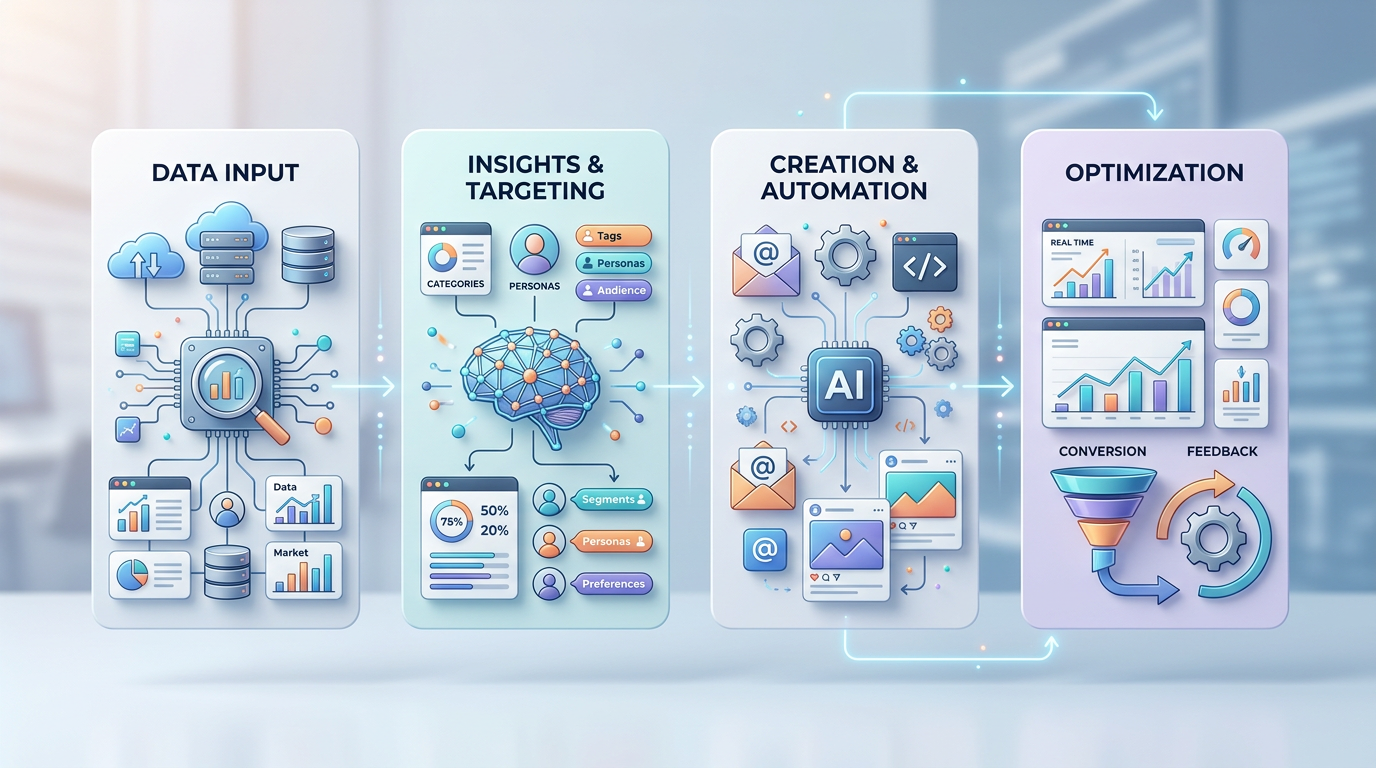
Google’s AI-powered search results, ChatGPT’s web browsing mode, Perplexity’s answer engine, and Bing’s generative search all rely on large language models trained to summarize, synthesize, and cite information. These models don’t rank pages the way traditional algorithms do. They evaluate content based on semantic relevance, entity recognition, contextual coherence, and source credibility.
When an AI model generates an answer, it scans indexed content for clear, well-structured information that matches the query intent. It looks for pages that define concepts early, use consistent terminology, include supporting evidence, and avoid ambiguity. If your content is hard to parse, the model moves on.
AI systems also rely heavily on entity graphs. An entity is a distinct concept, person, brand, product, or place that the model recognizes and connects to other entities. If your brand, products, or services aren’t clearly defined as entities across the web, AI models won’t understand how to position you in their answers.
Why Entity Recognition Matters More Than Keywords
Keywords tell search engines what words appear on your page. Entities tell AI models what your page is actually about. If you write about “AI marketing automation,” the model needs to understand whether you’re discussing a software category, a specific tool, a strategy, or a service offering.
Strong entity signals come from structured data, consistent naming conventions, authoritative backlinks, and clear definitions within your content. If your brand is mentioned alongside recognized industry terms, tools, and use cases, AI models learn to associate your brand with those concepts.
How AI Models Evaluate Content Quality and Trustworthiness
AI search engines prioritize content from sources they perceive as credible. Credibility signals include domain authority, citation frequency, author expertise, editorial standards, and alignment with established knowledge bases. If your content contradicts widely accepted information without explanation, the model deprioritizes it.
Content quality for AI SEO means clarity, completeness, and consistency. Pages that answer a question fully, define terms precisely, and avoid filler perform better in generative results. Pages that require the reader to jump to three other sources to understand the topic lose relevance.
How to Structure Content for AI Search Visibility
AI models parse content differently than human readers do. They scan for structured patterns, clear definitions, logical flow, and self-contained answer blocks. If your content is written like a narrative essay with no clear structure, AI models struggle to extract useful information.
Start every major section with a clear, concise answer to the implied question in the heading. Use short paragraphs. Avoid long introductory throat-clearing. Define terms the first time they appear. Use consistent terminology throughout the article.
Break complex topics into discrete, skimmable sections. Each section should be self-contained enough that an AI model could cite it independently without needing the rest of the article for context. That doesn’t mean repetition. It means clarity and completeness at the section level.
Use descriptive headings that match real search queries. Instead of “Getting Started,” use “How to Set Up AI-Powered Keyword Research in 10 Minutes.” Instead of “Best Practices,” use “5 AI SEO Mistakes That Kill Your Search Visibility.” Descriptive headings help both human readers and AI models understand what each section delivers.
Answer Blocks and Quotable Insights
AI models favor content that includes clear, quotable answer blocks near the top of the page. An answer block is a 2-4 sentence paragraph that directly answers the main query without requiring additional context. If someone asks “What is AI SEO?”, your answer block should define it clearly within the first 100 words.
After the answer block, expand with examples, context, and supporting details. But the initial answer must stand alone. That’s what AI models pull into featured snippets, generative summaries, and voice search responses.
Building Entity Authority for Your Brand
If AI models don’t recognize your brand as an entity, they can’t position you as an authority. Entity authority comes from consistent brand mentions, structured data, authoritative backlinks, and clear positioning across the web.
Start by implementing schema markup on every major page. Use Organization schema for your homepage, Article schema for blog posts, Service schema for service pages, and FAQ schema where relevant. Schema markup helps AI models understand what your brand does, what services you offer, and how your content connects to broader topics.
Build entity relationships by linking internally between related topics. If you have articles on AI SEO, AI marketing strategy, and GEO optimization, link between them using descriptive anchor text. This teaches AI models that your brand covers multiple aspects of the same domain.
Earn mentions on authoritative sites in your industry. When credible sources cite your brand, tools, insights, or content, AI models learn to associate your brand with expertise in that space. Guest posts, case studies, podcast appearances, and industry directories all contribute to entity recognition.
| Entity Signal Type | What It Does | How to Build It |
|---|---|---|
| Schema Markup | Defines your brand and content types for AI models | Implement Organization, Article, Service, and FAQ schema |
| Consistent NAP | Reinforces your brand identity across the web | Use the same name, address, and contact info everywhere |
| Authoritative Backlinks | Signals credibility and relevance to AI models | Earn links from industry sites, publications, and directories |
| Internal Linking | Teaches AI models how your content connects | Link related pages using descriptive anchor text |
| Brand Mentions | Builds recognition and topical association | Get cited, quoted, or mentioned on credible sites |
How to Optimize for Generative Search Engines
Generative search engines like Perplexity, ChatGPT, and Google’s SGE don’t display traditional blue links. They generate answers by synthesizing information from multiple sources. To get cited in these answers, your content needs to be clear, authoritative, and easy for AI models to extract and summarize.
Focus on answering real questions directly. Use question-based headings. Provide complete answers within each section. Avoid vague language, jargon without explanation, and filler content that dilutes your main points.
Support your claims with evidence. If you make a statement about search behavior, link to a credible study. If you recommend a tool, explain why it works and what problem it solves. AI models prioritize content that backs up claims with reasoning or data.
Make your content quotable. Write in clear, confident language. Use short sentences. Avoid hedging with phrases like “it seems” or “in some cases.” AI models prefer definitive statements supported by context over vague generalizations.
What Content Formats Perform Best in AI Search
AI models favor certain content formats because they’re easier to parse and cite. Guides, how-to articles, comparison posts, and FAQ-style content perform well because they’re structured, specific, and answer-focused.
Lists, tables, and step-by-step breakdowns also perform well because they’re scannable and information-dense. If you’re explaining a process, use numbered steps. If you’re comparing options, use a table. If you’re listing tools, include brief descriptions for each.
Technical AI SEO: What You Need to Optimize
Technical AI SEO ensures that AI models can crawl, parse, and understand your content without friction. That means fast load times, clean HTML, mobile optimization, structured data, and clear site architecture.
Start with site speed. AI crawlers index content based on performance signals, and slow sites get deprioritized. Use a CDN, compress images, minify code, and eliminate render-blocking scripts.
Implement structured data correctly. Use JSON-LD format for schema markup. Test your markup with Google’s Rich Results Test and Schema.org validators. Make sure your schema is accurate and up to date.
Build a clear internal linking structure. Every important page should be accessible within three clicks from your homepage. Use descriptive anchor text that explains what the linked page covers. Avoid generic anchors like “click here” or “learn more.”
Optimize for mobile-first indexing. AI models prioritize mobile-optimized content because most search happens on mobile devices. Make sure your site is responsive, readable, and fast on mobile.
How to Audit Your Site for AI SEO Readiness
Run a technical audit using tools like Screaming Frog, Ahrefs, or Semrush. Check for crawl errors, broken links, missing schema, slow pages, and thin content. Fix technical issues before focusing on content optimization.
Review your content for clarity and structure. Are your headings descriptive? Do your paragraphs answer specific questions? Is your content self-contained and quotable? If not, rewrite it with AI readability in mind.
How to Measure AI SEO Performance
AI SEO performance isn’t just about traditional rankings. You need to track visibility in AI-generated answers, citation frequency, entity recognition, and traffic from generative search tools.
Monitor zero-click searches and featured snippets. Tools like Ahrefs and Semrush track featured snippet wins. If your content appears in featured snippets, it’s more likely to be cited in AI-generated answers.
Track brand mentions across the web. Use tools like Brand24, Mention, or Google Alerts to monitor where your brand is cited. If authoritative sites mention your brand in relevant contexts, your entity authority is growing.
Analyze traffic sources from AI tools. Check your analytics for referral traffic from ChatGPT, Perplexity, Bing, and other AI search platforms. If you’re seeing traffic from these sources, your content is being cited.
Measure engagement metrics. AI-optimized content should reduce bounce rates and increase time on page because it answers questions fully. If users land on your page and immediately leave, your content isn’t meeting their needs.
Common AI SEO Mistakes and How to Avoid Them
Many businesses approach AI SEO with the same tactics they used for traditional SEO. They stuff keywords, chase exact-match domains, and prioritize volume over quality. Those tactics don’t work for AI search.
One common mistake is writing content that’s too general. AI models favor specificity. Instead of writing a broad overview, focus on a specific problem, use case, or audience. Instead of “AI Marketing,” write “How to Use AI to Automate B2B Lead Scoring.”
Another mistake is neglecting internal linking. AI models use internal links to understand how your content connects. If your pages are isolated, the model can’t build a coherent picture of your expertise.
Ignoring schema markup is another critical error. Without structured data, AI models have to guess what your content is about. Schema removes ambiguity and makes your content easier to understand.
Finally, many businesses focus only on Google. AI search is multi-platform. Optimize for ChatGPT, Perplexity, Bing, and other AI tools by making your content clear, authoritative, and citation-worthy across the board.
Real Examples of AI SEO in Action
Brands that excel at AI SEO share a few common traits. They publish clear, well-structured content. They use schema markup consistently. They build entity authority through backlinks and mentions. And they answer real questions directly.
One SaaS company optimized their product pages with Service schema, added FAQ sections to every key page, and rewrote their blog content with AI readability in mind. Within three months, they saw a 40% increase in featured snippet wins and a 25% increase in organic traffic from AI search platforms.
A B2B consultancy focused on entity-building. They earned mentions on industry blogs, published case studies on their own site, and linked internally between related service pages. Their brand mentions increased by 60%, and their content started appearing in ChatGPT and Perplexy answers.
An ecommerce brand rewrote their category pages with clear product definitions, comparison tables, and structured data. They saw a 30% increase in organic conversions because their pages started showing up in AI-generated shopping recommendations.
How to Get Started with AI SEO Today
Start by auditing your existing content. Identify your most important pages and evaluate them for AI readability. Are your headings descriptive? Do your pages answer specific questions? Is your content quotable?
Implement schema markup on every key page. Use JSON-LD format and test your markup with validation tools. Focus on Organization, Article, Service, and FAQ schema.
Build internal links between related pages. Use descriptive anchor text and link from high-authority pages to newer content. This helps AI models understand your site structure and topic coverage.
Rewrite your most important content with AI search in mind. Add answer blocks, use clear headings, support claims with evidence, and eliminate filler. Make every section self-contained and quotable.
Track your progress. Monitor featured snippet wins, brand mentions, and referral traffic from AI search platforms. Adjust your strategy based on what’s working.
If you need help building an AI SEO strategy that actually drives visibility and conversions, request a free growth plan from TAMA. We’ll analyze your site, identify optimization opportunities, and show you how to rank in both traditional and AI-powered search engines.

Frequently Asked Questions About AI SEO
What’s the difference between AI SEO and traditional SEO?
Traditional SEO focuses on ranking for specific keywords in search engine results pages. AI SEO focuses on being cited, summarized, and recommended by AI-powered search engines and assistants. It requires content that’s semantically clear, well-structured, and optimized for entity recognition, not just keyword density.
Do I need to rewrite all my content for AI SEO?
Not necessarily. Start by optimizing your most important pages: homepage, service pages, and top-performing blog posts. Focus on adding schema markup, improving content structure, and making your content more quotable. You can update older content gradually as resources allow.
How do I know if AI search engines are citing my content?
Check your referral traffic in Google Analytics for sources like ChatGPT, Perplexy, Bing, and other AI platforms. You can also manually search for your brand or key topics in AI search tools to see if your content appears in generated answers. Tools like Brand24 and Mention can track brand citations across the web.
Is schema markup really necessary for AI SEO?
Yes. Schema markup is one of the clearest signals you can send to AI models about what your content covers and how it should be categorized. Without schema, AI models have to infer meaning from context, which reduces your chances of being cited accurately or at all.
Can small businesses compete in AI SEO?
Absolutely. AI SEO rewards clarity, specificity, and expertise, not just domain authority or budget. A small business with clear, well-structured content can outrank a larger competitor with vague, generic content. Focus on answering real questions and building entity authority in your niche.
How long does it take to see results from AI SEO?
Most businesses see measurable improvements within 3 to 6 months. Early wins include featured snippet gains, increased brand mentions, and referral traffic from AI platforms. Long-term results include stronger entity recognition, higher organic rankings, and better visibility in generative search results.